Safari, Surrender, Reset
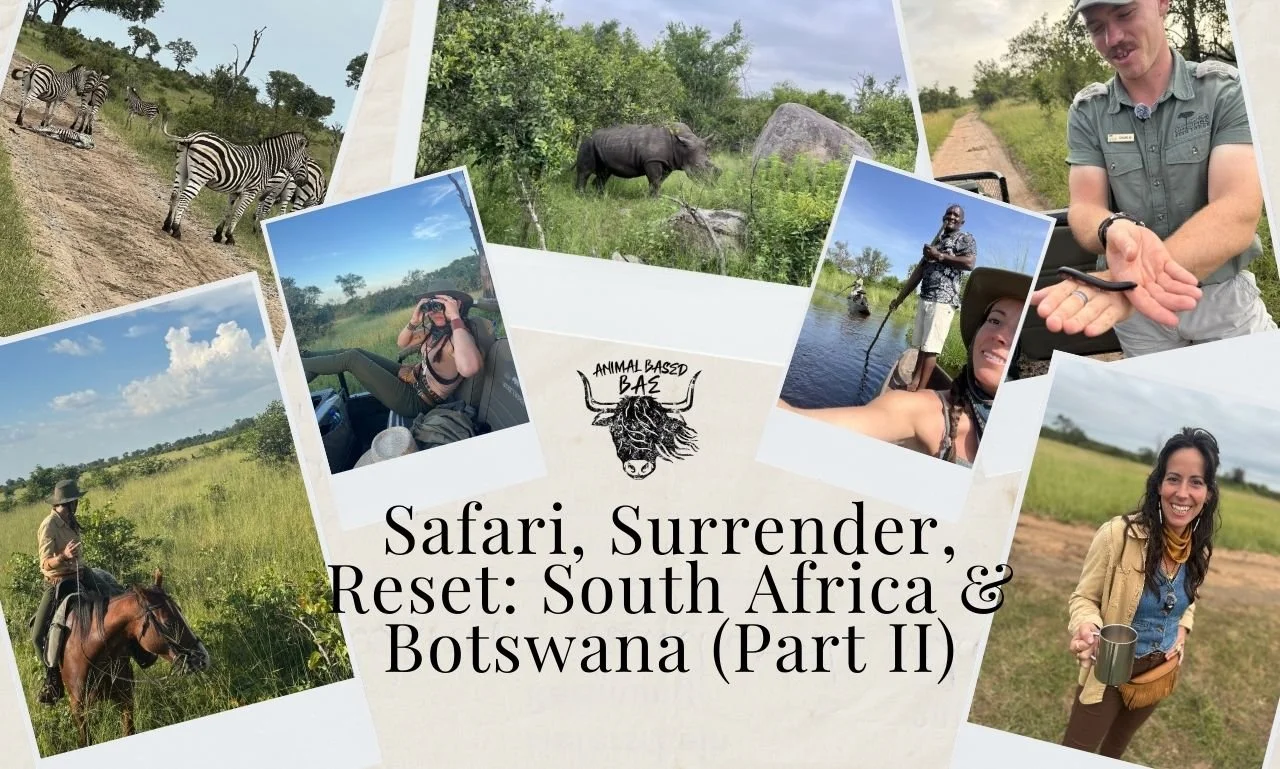
A Meaningful Safari in South Africa & Botswana
Surrender, Strength & Nervous System Reset
This is Part II of my South Africa journey — still through the lens of wellness, nourishment, and living fully without coming home depleted. I’m sharing practical tips on what to expect along the way, how to maintain your health while allowing travel to unfold naturally, my favorite finds, and the logistics that make everything seamless, plus helpful insights to better prepare if you’re considering a safari. It’s about staying in good condition without gripping too tightly and supporting your body while letting the experience take its natural course.
If you care about your health while traveling, if you try to stay animal-based, prioritize protein, protect your sleep, and avoid coming home feeling wired, inflamed, or “off”, you know travel can be challenging. It can disrupt circadian rhythm, spike stress hormones, alter digestion, and quietly dysregulate your nervous system.
But it doesn’t have to.
Eating well while traveling can be simple with a little preparation. Protecting your sleep cycles is possible with small adjustments. Supporting your nervous system through light exposure (plenty in South Africa!), hydration, mineral balance, and intentional pacing allows you to experience a trip fully instead of moving through it like a jet-lagged zombie.
Because I know how many people struggle with diet and energy while traveling. They either over-control and stress… or completely abandon structure and feel drained afterward. There is a middle ground. This is how you travel and return rejuvenated — not needing a vacation from your vacation.
If Part I was about nourishment and community through farmers, local gems, recommended experiences, exploring a new city, and shared tables, Part II is about surrender and discovering community in a far more elemental way. It was about deep connection while loosening my grip slightly. Staying primarily animal-based. Prioritizing health and stability. But also allowing flexibility where needed.
Leaving Cape Town felt like stepping out of modern comfort and into something older. I packed intentionally. I brought supportive staples. I mentally prepared to release control where necessary. Safari demands flexibility — long drives, early mornings, shifting plans. What I didn’t anticipate was how deeply regulating it would feel.
Yes, safari demands surrender. The land sets the pace. Weather changes plans. Animals don’t perform. Roads flood. Vehicles get stuck. But what surprised me most was that surrender didn’t feel isolating. It felt communal.
The guides and trackers in Sabi Sands and the Delta moved with quiet confidence, a rhythm born from living in sync with something bigger than yourself. When roads were washed out from flooding the week before, there was no frustration — just recalculation. When we got stuck in mud, there was no urgency — just teamwork. Watching them respond without frantic energy was regulating in a way I hadn’t expected.
And then there were the small, human moments.
Each camp carried a different energy, a different pace, a different relationship with the land and the animals. I’ll share more about those distinctions below. Some staff welcomed us with song; others with cool towels. Someone remembered how I took my coffee. Someone genuinely asked about my experience and listened to the answer. We visited a nearby local town on our second lodge stay and saw daily life unfold without performance or spectacle — just children playing, women crafting, people living fully in their own rhythm and knowing our presence directly supported that community added another layer of meaning.
It grounded everything.
Safari could easily become about animals, landscapes, and sightseeing. But what stayed with me was the warmth and the deep calm. Authentic, unforced, woven into daily life. You weren’t being “serviced.” You were being welcomed.
And something about that softened me.
How I Prepped for Safari: Logistics, Travel & Food
Getting to and from safaris aren’t passive travel. It’s long-haul flights, circadian disruption, early wakeups, sun exposure, and inconsistent meal timing. Preparation matters.
We flew from Cape Town to O. R. Tambo International Airport in Johannesburg, then onward to Skukuza Airport. Even though it was domestic, we went through passport control — a small surprise, so be prepared. With early departures and tight lodge transfers, planning your time and nutrition ahead was essential.
My travel staples followed a simple philosophy: bring a few reliable items to keep your energy steady and your body supported, especially in remote regions where options may be limited. Remote safari lodges are accommodating, but they aren’t built around personal food preferences. Being prepared meant I could focus on the experience instead of worrying about meals.
Other small travel hacks helped too: portable red lights to come to in the room to wind down after late dinners, earplugs for the bush’s loud night rhythms (though the natural soundtrack is lovely during non sleeping hours and 1000% better than city noise), and simple hydration strategies.
I’ll share more about the full food experience at each lodge — from the first lodge’s simple, serviceable fare to the second lodge’s thoughtfully prepared, locally inspired, and genuinely delightful meals. I’ll break down both in detail below.
Travel Notes: We flew Airlink for all regional travel within Africa — easy, efficient, and seamless. For ground transfers and overall logistics, we worked with African Safari Group (more on that below). We did not need vaccines or visas traveling from the U.S. to South Africa or from South Africa to Botswana. That said, requirements can vary depending on your departure country and passport, so always double-check current entry guidelines before booking.
Sabi Sands: Precision, Tracking & the Art of Stillness
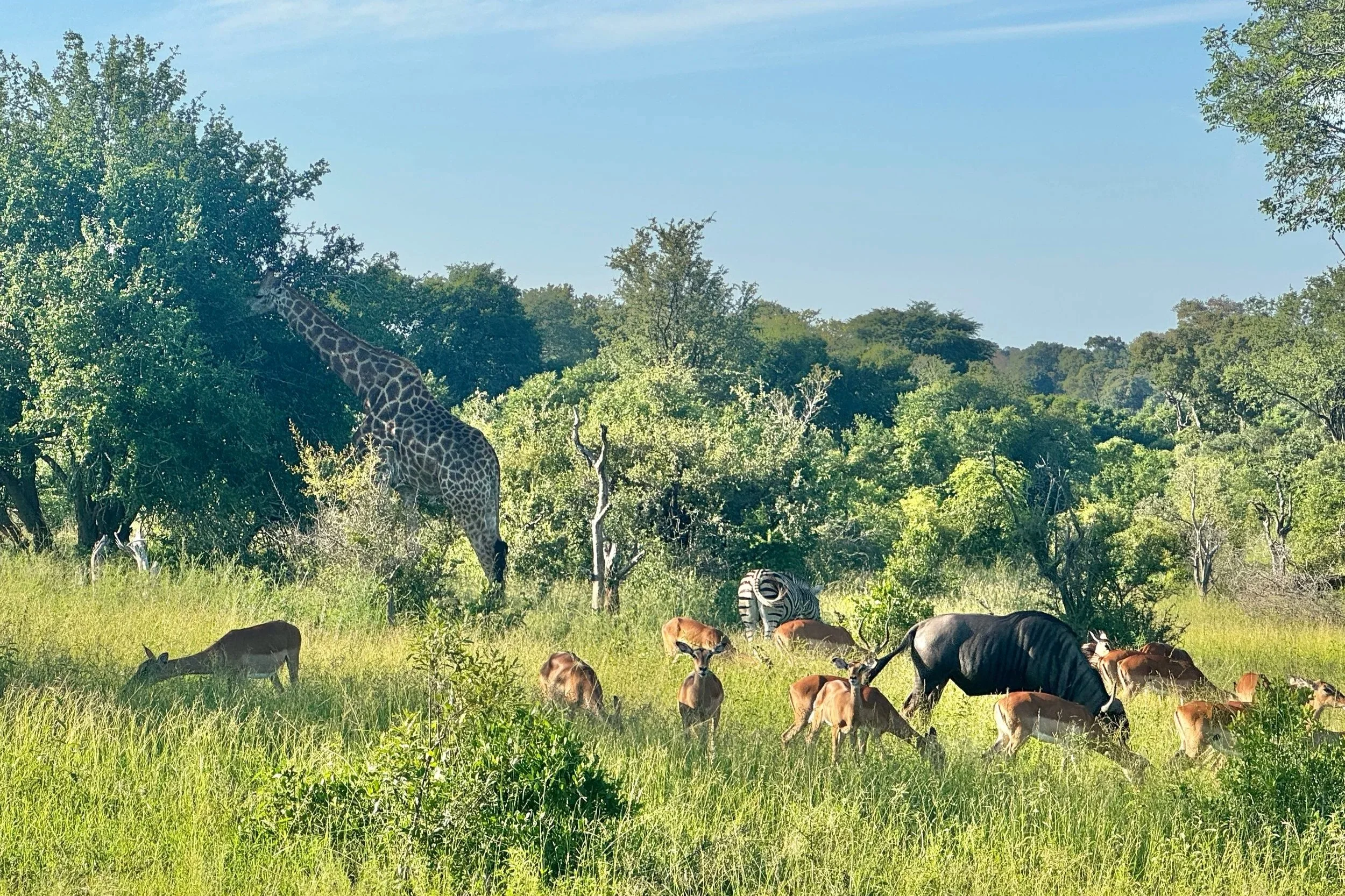
We landed in Skukuza and, after our drive through Kruger to get to our lodge — where we had already spotted elephants, giraffes, zebras, and wildebeest just on the ride in — transitioned into Sabi Sands for five days of fully immersed, vehicle-based safari at Umkumbe Lodge.
The week before, severe flooding had triggered emergency evacuations in all of Kruger National Park, and roads had been shut down due to flooding. We weren’t entirely sure the safari would proceed as planned, but access reopened just a day or two before our arrival — a relief.
Our entry began a little differently than expected. Because the roads weren’t equipped for regular transport vehicles, we walked over a small bridge and along train tracks during some transfers — luggage in hand and with many people helping. Nothing dramatic. Just practical. A reminder that bush travel requires flexibility, patience, and collaboration.
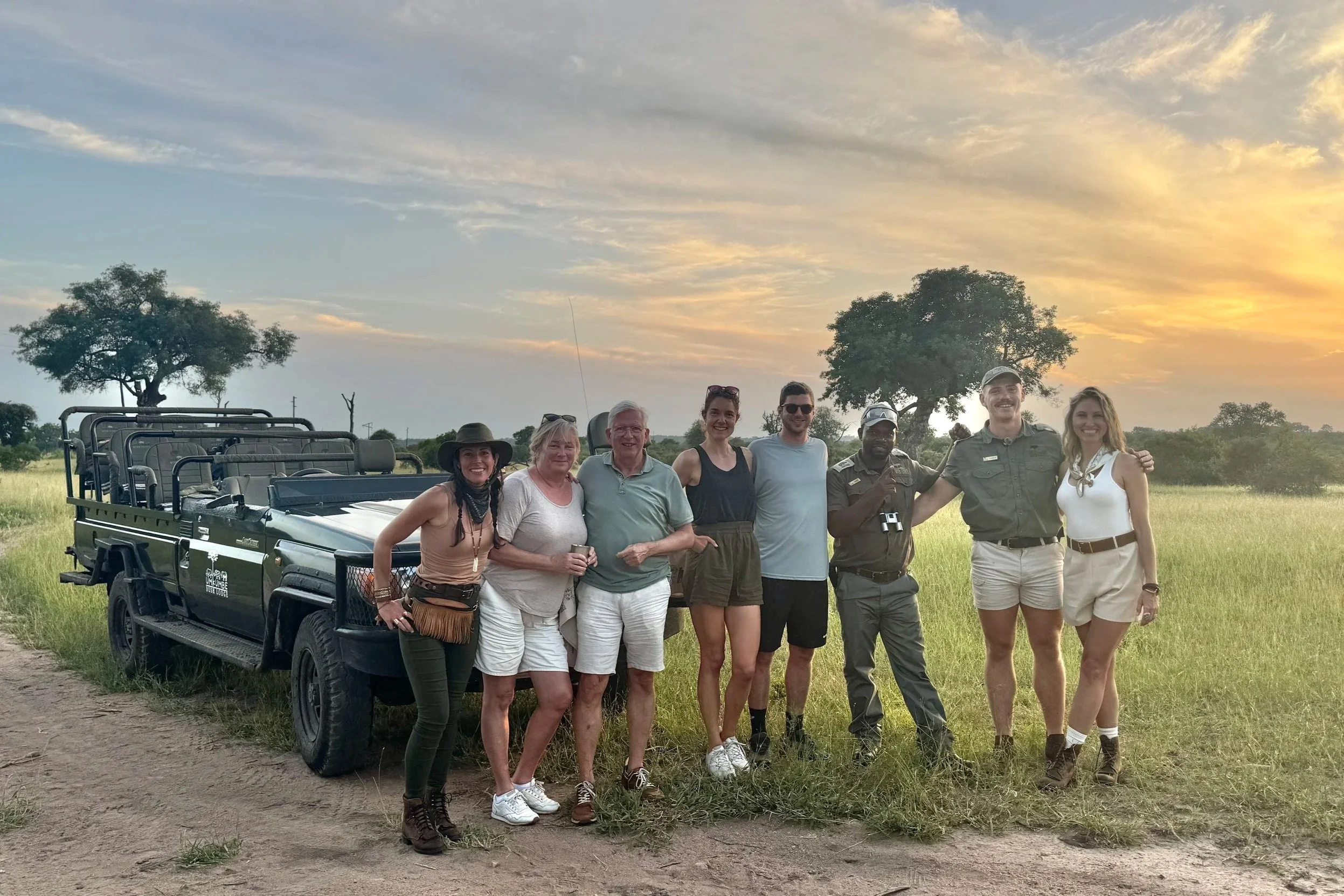
Midway through, we met Charlie, our guide for the week, who arrived in a customized Toyota Land Cruiser — open-roofed, with tiered seating for better wildlife viewing, open sides, and ponchos on hand in case the rain rolled in — built to navigate the rougher terrain ahead. He was animated, sharp, deeply knowledgeable in tracking, and genuinely fun to be around. His energy set the tone for the days ahead.
Umkumbe welcomed us with crisp, cool towels — a quiet, thoughtful gesture that immediately felt grounding after travel.
Morning drives began at 5:30 a.m. and lasted about three hours; evening drives started at 4:30 and ran just as long. The rhythm quickly became familiar. Mid-drive stops were simple but delightful: stretching our legs, coffee breaks, sometimes gluten-free crêpes prepared just for me (something i dont normally eat but said yes to on this trip), and in the evenings, a small pour of wine paired with biltong and dried fruit as the sun dipped low. These small rituals became anchors — shared pauses in the wild that felt both communal and comforting.
The guides and trackers read the land like a language — paw prints pressed into the sand, broken twigs, subtle disturbances in the brush. The vehicles moved deliberately, guided by knowledge, intuition, and a little bit of chance. We often followed leopard tracks for long stretches, only to catch a fleeting glimpse of the cat’s hindquarters slipping back into the bush. Learning to notice the signs became its own reward.
Five days in a vehicle cultivates a quieter kind of awareness. You begin noticing ear flicks in tall grass, subtle shifts in bird calls, changes in wind direction and how it all affects predator communication, animal movement, and migration. You start using all your senses — eyes, ears, nose — even your core, as the terrain shifts beneath you. It demands a level of presence that modern life rarely does. Not the kind of attention we give while sitting and staring at a computer, but something far more instinctive and alive.
Between drives, we returned around 8:30 a.m. for breakfast, followed by long, unstructured hours. I spent time by the pool (a perk at this lodge), uploading photos, reading, napping, or simply sitting and soaking in the view. The WiFi worked in the room but not so much around camp… and honestly, I liked it that way. Umkumbe also had a small outdoor gym, which I skipped due to a lingering back injury, but it’s there for those who want movement between drives.
There isn’t much to do outside the scheduled safaris. You’re in the bush. And that’s precisely what makes it restorative. The quiet is the offering.
Food at Umkumbe: The meals were serviceable and generally protein-forward (if you ask for it), though not exceptional. Breakfasts were straightforward, lunches moderate, and dinners meat-based but simple. Having a few personal protein backups — biltong, canned fish, quality bars — allowed me to maintain steady energy and focus on the experience rather than the logistics of meals.
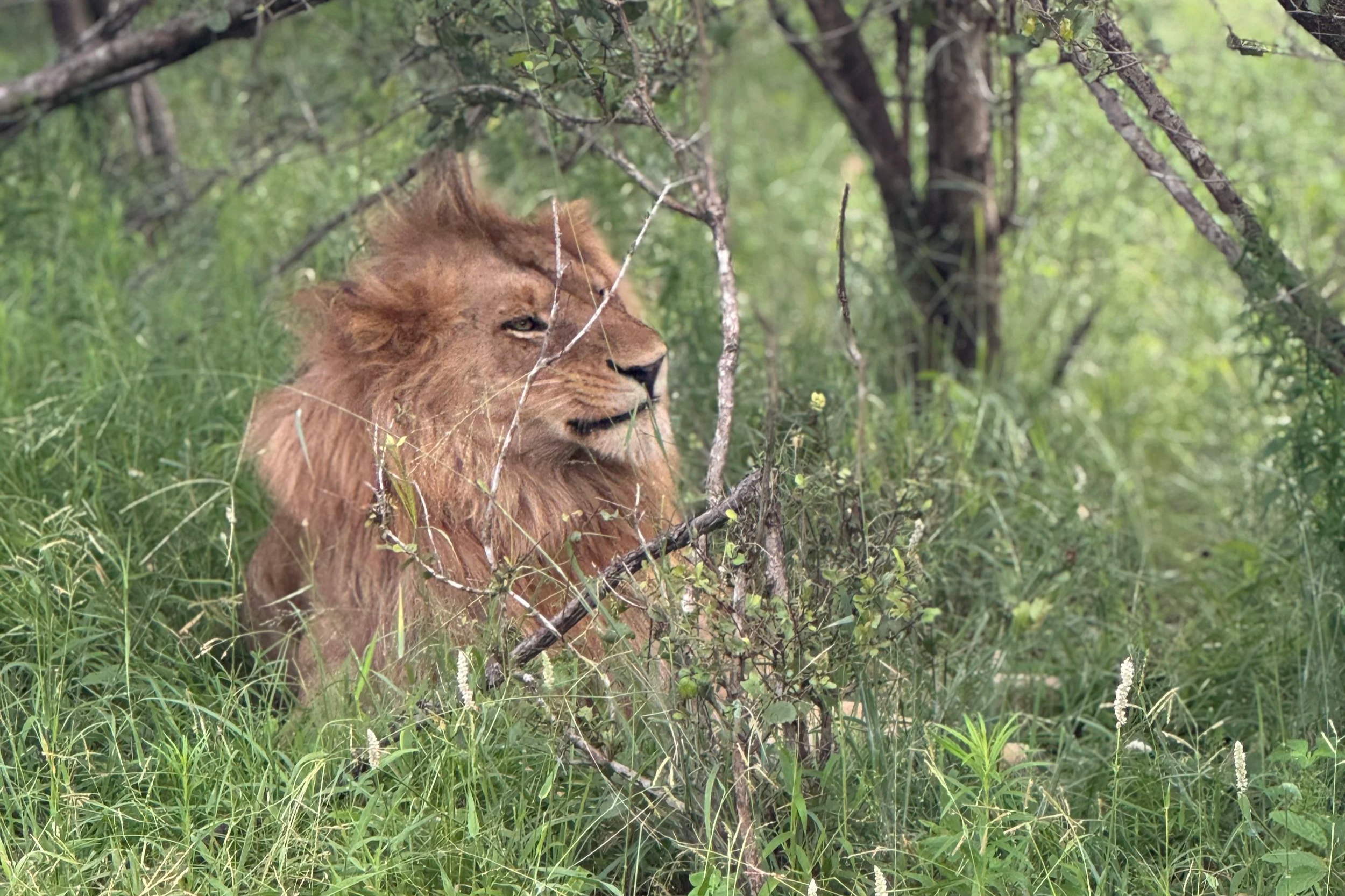
From Cool Towels to Song
We truly enjoyed our stay at Umkumbe — especially with Charlie leading our drives. He made it a five-star experience with his knowledge, humor, and animated storytelling. We also had a great group in our vehicle, which made the long drives even more enjoyable.
The lodge itself was beautiful — thoughtfully designed with open spaces to gaze out over the land and quietly scan for animals. There was a pool for the warm afternoons, a small outdoor gym, a main area where breakfast was served, and a separate outdoor dining space for dinner (weather permitting, which we were lucky to have). Our tent was more “glamping” than rustic: hot shower, proper toilet, a genuinely comfortable bed — everything we needed to feel at ease while still immersed in the bush.
In five days, we saw four of the Big Five. We didn’t see buffalo, and we only briefly spotted a leopard, but we saw the others and so much more. Five days felt just right. A day longer and I might have been ready to move on. A day shorter and I don’t think I would have settled in enough to appreciate the quieter, non–Big Five moments the way I did.
Five days in a vehicle cultivates a quieter kind of awareness. You begin noticing ear flicks in tall grass, subtle shifts in bird calls, changes in wind direction — and how it all affects predator communication, animal movement, and migration. You start using all your senses… eyes, ears, nose … even your core as the terrain shifts beneath you. It demands a level of presence modern life rarely asks of us — not the passive attention of sitting at a computer, but something instinctive and fully alive.
By the end, I felt complete.
Then we continued on to what felt like the main event — and the reason it was an immediate “hell yes” for me: the horseback safari.
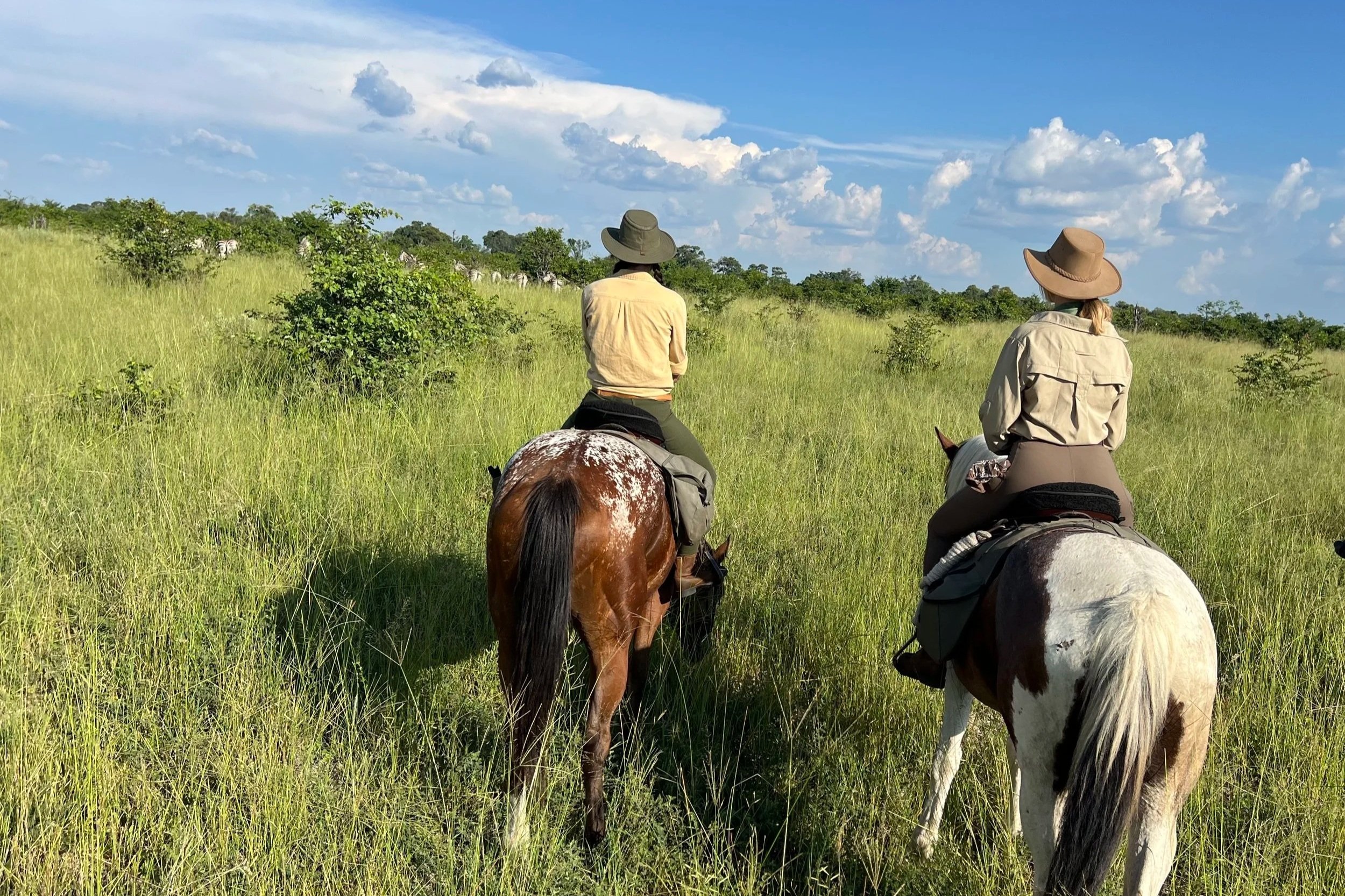
Crossing Into the Delta
Even in a vehicle, you remain slightly separate from the wild. Elevated. Protected. Observing. That boundary would dissolve completely in Botswana.
Leaving Sabi Sands was bittersweet. We said goodbye to our new friends and drove back the way we had come, returning to Skukuza for our flight to Johannesburg. We stayed overnight at the hotel inside O. R. Tambo International Airport, giving ourselves a soft landing before the next early departure.
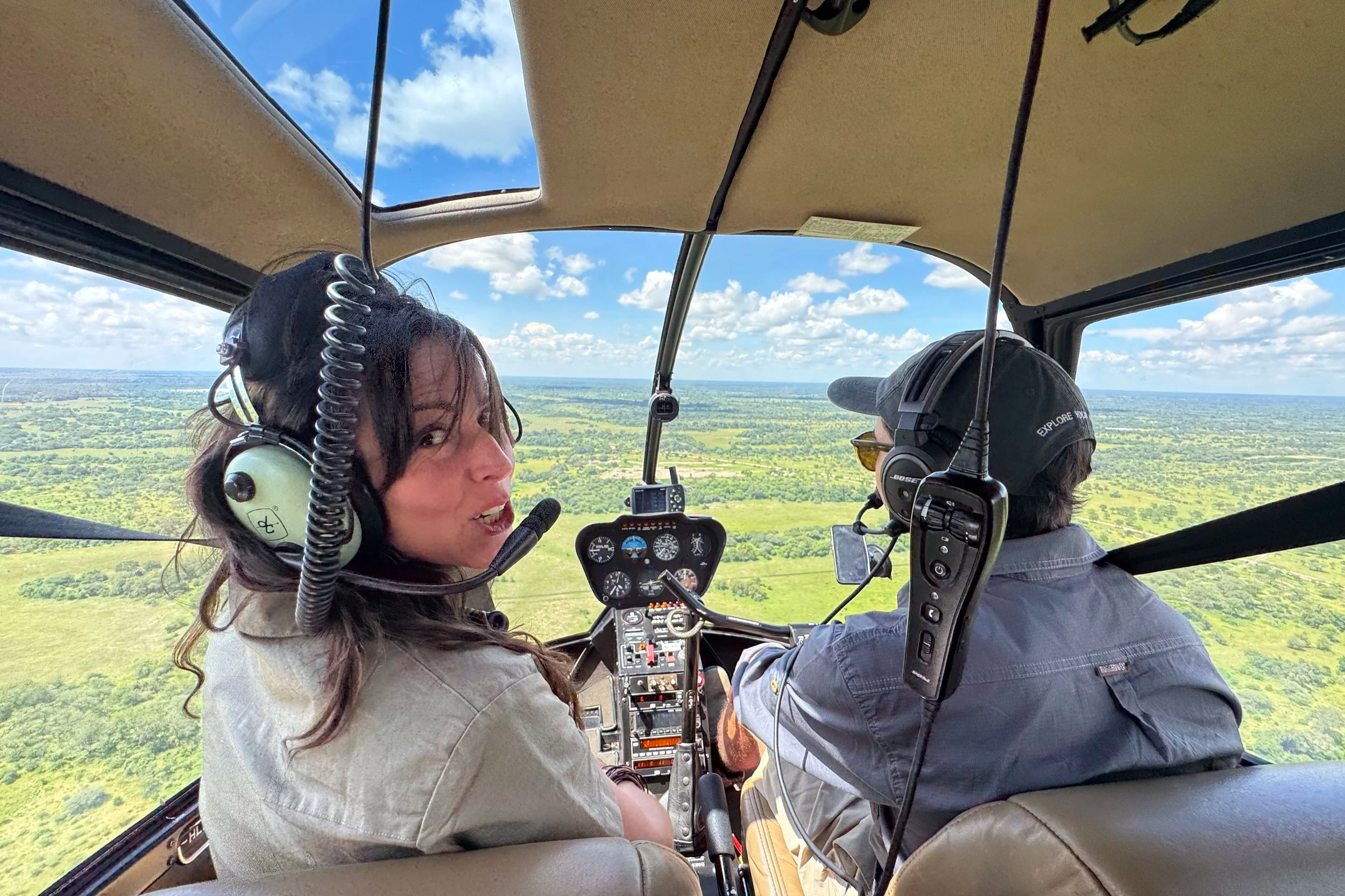
The following morning, we flew to Maun — a small airport that serves as the gateway to the Okavango Delta. From Maun, there are typically two ways into camp: a two-hour bush drive (which, as we later learned, can stretch to four), or a helicopter transfer. We chose the helicopter on the way in, leaving the return flexible and ultimately chose it again.
The 20-minute flight was spectacular. A bird’s-eye view of winding waterways, shifting light, and herds moving like brushstrokes across the land. It didn’t feel like we were missing anything by skipping the drive, the aerial perspective offered something entirely different.
The helicopter set down in tall grass, seemingly in the middle of nowhere. Waiting for us beside a proper safari-style Toyota Land Cruiser was KB — a guide with a completely different personality, which at first required a little adjustment but quickly became endearing. Always greeting us with fist bumps, noticing the pauses between words and actions, he had a style all his own. I loved discovering his rhythm as he readied us for the final stretch into camp and would be our guide for this journey.
When we arrived at Cha Cha Metsi in the Delta, the contrast from Umkumbe was immediate.
No cool towels. Instead, song — not staged, not performative. Just voices rising together in rhythm, welcoming us into camp. That was followed by smiles, greetings, and a few important briefings: we were definitely not in a protected, fenced area anymore. Safety rules, explanations of the grounds, chaperones in case of animal encounters on the property, and, of course, waivers (hello, horseback safari and Delta adventures, haha).
We also met another host, Kevin, and quickly started picking up on the rhythms of the locals and their style of communication. Long, thoughtful pauses were common, often punctuated with a calm “mmmm,” which made everything feel relaxed, grounded, and effortlessly chill and somehow it carried a message, a subtle download, something to take home.
Where Umkumbe felt insulated and structured, Cha Cha Metsi felt intimate — woven into the land itself. Smaller. Unfenced. Quieter. Hippos moving through the water beyond our tent. The possibility of predators passing through camp at night.
Here, the guides hadn’t gone away to school to become guides — this was their homeland. Their knowledge wasn’t memorized from a manual; it was inherited, lived, layered through years of moving within that ecosystem. You could feel the depth of that connection. There was less narration and more instinct. Less performance and more presence.
There was also more of a language barrier at times, and the energy felt different — quieter, less animated than what we had grown used to. It took a bit of adjustment to find a shared rhythm and understand one another’s communication style. But once we did, the experience felt even more authentic. Not curated, but deeply real.
It wasn’t just a place they worked. It was a place they belonged to and that belonging shaped everything.
In Kruger and Sabi Sands, you witness the wild.
In the Delta, you live inside it.
And that shift, from observing to participating, set the stage for everything that followed, including the horseback safari that would quite literally bring me to the ground.
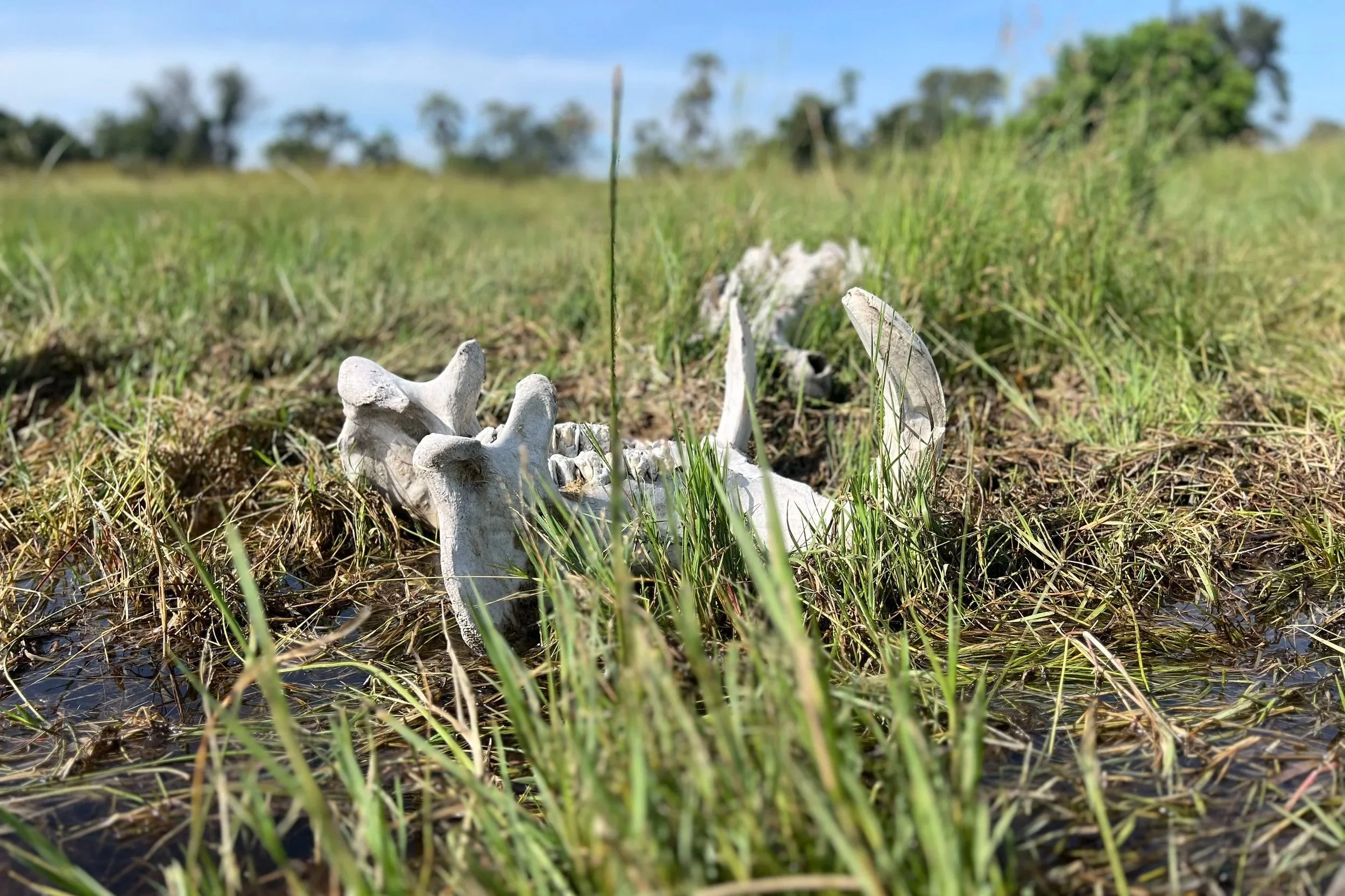
When the Wild Reminds You
Horseback safari in the Okavango Delta felt different from anything that came before it. On a vehicle drive, you’re elevated and protected. On horseback, you are another animal moving through the system — lower, quieter, more exposed.
We had been riding across open Delta grassland for maybe thirty minutes to an hour when it happened.
Something exploded out of the brush beside us.
There was no warning. Just a violent rustle, a flash of movement, and the immediate, instinctive reaction of the horses beneath us. Prey animals don’t pause to assess. They respond.
One second I was upright.
The next, I was on the ground.
For what felt like thirty suspended seconds, I landed hard on my tailbone, then immediately popped up in full fight-or-flight mode, standing in the tall grass as my body tried to catch up with what had just happened. I scanned the brush. The crew was already in motion — both guides off their horses, one with a rifle in hand, the other grabbing my spooked horse. My friend was still on her horse, which was sort of galloping or skirting away, caught between flight and control.
You don’t immediately know what charged out of the bush. In unfenced wilderness, your mind moves fast — faster than logic.
Predator?
Lion?
Something bigger?
Adrenaline stretches time. Everything felt quiet and loud at once.
And then I heard someone say it.
“It’s just a warthog.”
So… you mean to tell me it was Pumba?
Relieved and only then did I realize the wind had been knocked out of me in the fall. Survival mode had completely overridden it. I bent over, took a deep breath, felt my lungs catch up to my body, and let out a half-laugh…Hakuna Matata…no worries…message received.
But in that moment, it definitely didn’t feel trivial. It felt like a message. Instructive. Thanks, God.
The Delta doesn’t promise control. It promises participation. Things move quickly. Animals react instinctively. You can prepare your body, train your stability, pack electrolytes and protein, but eventually, something bursts from the bushes.
And you hit the ground.
And then, if you’re lucky, you stand back up and climb on again, which is exactly what I did. And by the fire later, I had a good story to tell.
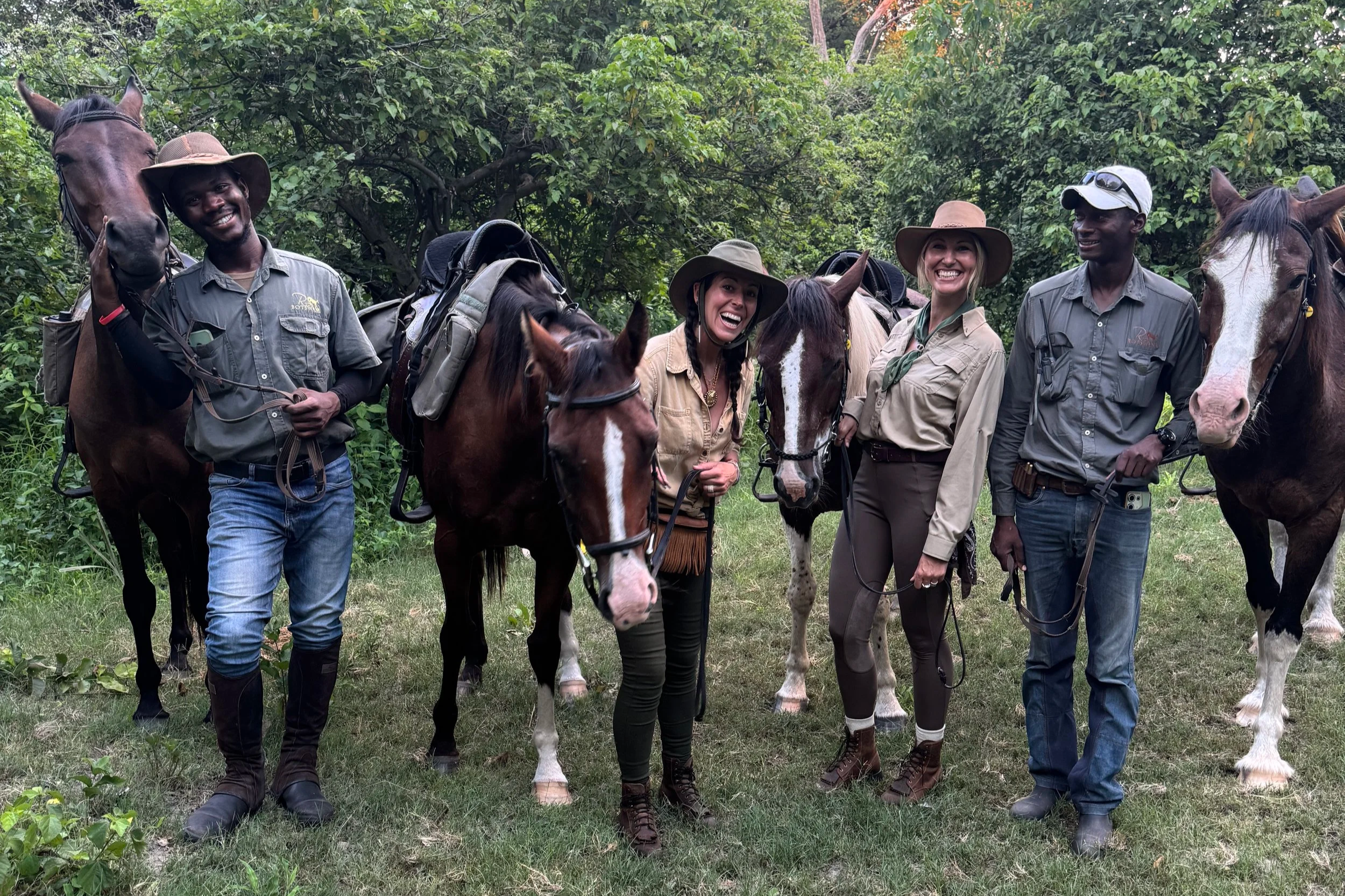
Living the Delta: Horseback, Canoe, Termites, Firepits, and the Magic of Cha Cha Metsi
Botswana expanded our safari experience beyond horseback riding, offering multiple ways to observe the wild:
Horseback
Vehicle
Canoe
Of course, I loved the horseback safari. Observing animals on horseback offered a completely different perspective than from a vehicle: their movements were more pronounced, almost stampeding at times, and their tones and colors differed from what we’d seen in Kruger or Sabi Sands. Riding made me feel more connected to the land — moving through it, rather than over it.
The rides included walking, trotting, cantering, and even moments of galloping. As someone between beginner and intermediate, I was a little nervous — especially since I had suffered a back injury shortly before preparing for the safari. The team at Ride Botswana, which works closely with Cha Cha Metsi, assessed each rider’s skill beforehand to ensure everyone was comfortable and prepared.
The approach in Africa is different from the U.S.: you are responsible for your own choices and safety. Guides provide support, but they don’t “babysit” in the way you might expect elsewhere. That dynamic added a layer of adventure and personal responsibility.
Helmets were optional, and the saddles leaned more English style. The horses had pouches for water, binoculars, and other essentials. They were well-trained and desensitized but could still spook. Safari horses often follow the leader, so rather than directing my horse entirely myself, I learned to follow the lead horse — which actually improved our communication. Instead of announcing the animals we were about to see, hand signals were used, a distinct and fascinating difference from vehicle safaris.
Often, I found myself leaning into the quiet, listening to the soft sounds of hooves walking through tall grass or shallow water, and feeling the thrill of galloping alongside the wild. Being on horseback allowed us to weave through brush in ways vehicles cannot — like the moment our guide spotted a hyena and we quietly gave chase. It was exhilarating, far more immersive than a vehicle safari, and gave me a sense of being truly part of the wild rather than simply observing it from a distance.
We also did one vehicle safari with KB. Wildlife sightings were limited on this ride, but we encountered tons of termite hills — apparently very important in the area — and KB shared far more than I could absorb! Midway through, we stopped for wine, biltong, and fruit. I also loved spotting more birds on this part of the journey, a fun reminder of how different this ecosystem feels from other safaris.
The canoe safari surprised me the most — gliding quietly through lilies while knowing hippos were nearby. Calm doesn’t mean complacent, and I loved every second. KB also took us to a local village that the lodge directly supports. Many of the staff at Cha Cha Metsi grew up there and served as our guides through the marsh. It was fascinating to see how they live in the Delta — the ways they build their homes, access water, and use deterrents to keep predators away — and then to experience the canoe ride with them felt incredibly special.
The lodge itself was beautifully designed: separate guest tents for privacy, and one large communal tent for meals and daytime lounging overlooking the hippo pond. A stunning firepit became a comforting gathering spot each evening, especially with a glass of wine after my horseback mishap (yes, the fall that had me laughing later). Morning sunrises with coffee were spectacular — peaceful, quiet, and grounding. Safari drives here were slightly more flexible than at Umkumbe: morning drives started a bit later, and evening drives began around 4:30–5:00 p.m., each lasting about three hours.
Mornings were beautiful — coffee by the fire, breakfast with the sunrise. Evening meals were warm and communal, sometimes ending around the fire with singing, dancing, and even celebrating a guest’s birthday. Staff and travelers felt integrated, not separated — truly communal. Sleep came with a wild soundtrack: hippos, insects, and distant movement. WiFi was weak, but that disconnection felt medicinal.
The glamping tents were luxurious, with comfortable beds, hot showers, toilets, decks overlooking the Delta, and even small deck pools. Earplugs and requesting a fan are highly recommended, as it can get warm. Nights required caution — predators move through the area, so we always had chaperones when venturing out.
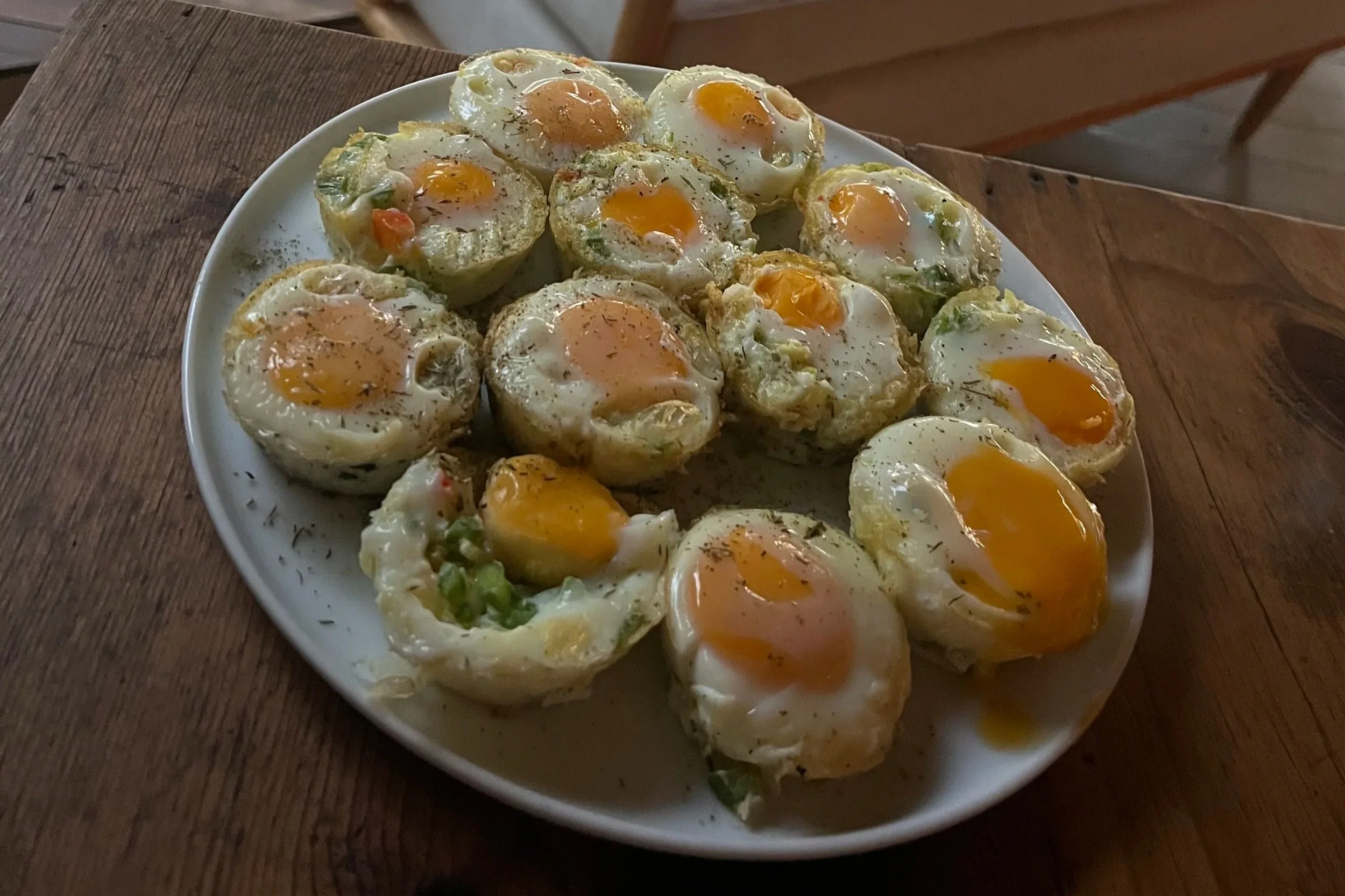
Food at Cha Cha Metsi: The food here was incredible: fresh, creative, and gluten-free when requested. Morning coffee and breakfast, high tea at 4:30 p.m., and hearty dinners after each safari were thoughtful and abundant. I loved enjoying fresh, local ingredients such as eggs, oxtail, chicken, pork ribs, fish, and vegetables. Gluten-free options were prepared with care, while other guests without dietary restrictions enjoyed additional treats like bread, cookies, and breaded proteins. Every meal felt intentional, nourishing, and deeply satisfying — a joyful contrast to Umkumbe’s more serviceable fare.
The Journey Home
Our departure was a mix of reflection and practical logistics. We flew from the Delta to Maun, then onward to OR Tambo International in Johannesburg. That evening, we boarded our 10 p.m. flight back to the U.S. On the last morning before travel, we lingered over showers, packed, wrote in the guestbook, and shared hugs and goodbyes. By the time we left Botswana (flying by helicopter back over the Delta’s winding waterways) I didn’t feel like I had consumed an experience. I felt like I had participated in one.
At OR Tambo, we had a little fun shopping for souvenirs before heading to the gate. Food on the flights was minimal — just biltong, a final protein carnivore bar, and a few pieces of fruit from the airline (which I normally avoid), but I welcomed them for hydration and minerals.
Finally, I said goodbye to my friend during our U.S. layover and returned home to Texas. Even back in familiar surroundings, the rhythms and lessons of the Delta stayed with me. The quiet, the shared unpredictability, the sense of true participation in the wild.
Hakuna Matata in Practice: Community and the Wild
The longer we were in the bush, the more I realized something subtle was happening to my nervous system:
The lack of constant digital input
The rhythm of early drives and long silences
The communal dinners under the open sky
The singing, dancing, firelight, and laughter
Even unpredictability felt shared. In modern life, stress often feels isolating — private deadlines, private anxieties, private screens. In the bush, unpredictability belongs to everyone. When the vehicle reroutes, everyone reroutes. When rain shifts plans, everyone shifts.
There’s something profoundly regulating about collective surrender.
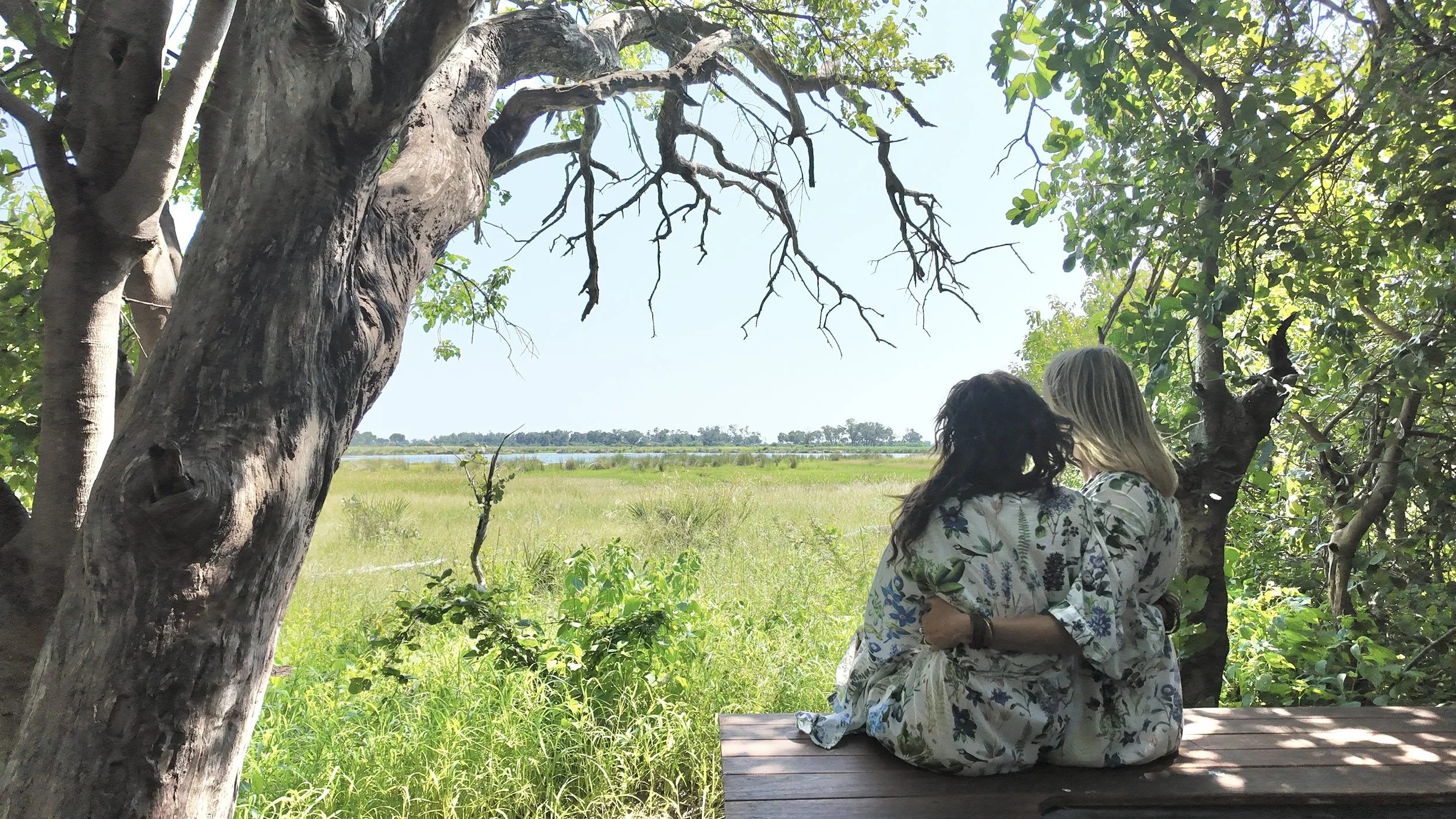
South Africa showed me scale — vast landscapes, powerful animals, weather that can reshape roads overnight. Botswana showed me intimacy — unfenced camps, hippos outside the tent, and a close call after a warthog reminded me that control is an illusion.
But both reinforced the same quiet truth: resilience isn’t built by eliminating unpredictability. It’s built by preparing well and then trusting your body and yourself within whatever unfolds.
And somehow, I forgot about my back. My body never felt inflamed. It didn’t crave protocols or rehab exercises — it craved human connection. It craved my nervous system feeling grounded, alive, still, and excited. The laughter we shared, the joy and playfulness of being fully present, felt healing. Sure, I might have been a little stiff for a few days after the travel, but once the journey settled, my back was in better shape than it had been in months.
Community isn’t just shared meals or curated gatherings. It’s shared patience when tires spin in mud. Shared laughter after a fall. Shared songs at the end of a long day. Hakuna Matata. Not as a slogan. As practice.
I didn’t come home entertained. I came home steadier. Moments of pause — “mmmmm” moments without needing to decipher the next thing became more pronounced. That steadiness, that quietly expanded awareness, feels like the real gift of the wild.
Travel Note & Recommendations
I booked the entire safari itinerary through African Safari Group and can’t recommend using a trusted travel coordinator enough when visiting South Africa and Botswana.
Not only did they manage logistics, but they ensured safety, ethical wildlife interactions, and a seamless overall experience. There are operators who don’t treat animals responsibly, and planning something this layered on your own can quickly become overwhelming. Even for someone like me who typically plans every detail and rarely works with a travel agent — using a safari consultant was absolutely worth it. I would do it again in a heartbeat.
Packing Notes
Here’s what I found most useful for a multi-stop trip combining Cape Town, South Africa, and Botswana — especially with horseback safaris involved. I packed as lightly as possible and focused on multifunctional pieces. Jewelry helped elevate simple outfits without overpacking, and honestly, I didn’t find myself needing anything I hadn’t brought.
Clothing
Riding jeans (also perfect for Cape Town outings and other safari days)
Lightweight, neutral earth-tone button-up shirts
Bandanas
A safari-style hat that stays secure during horseback rides
Riding/safari boots, Sandals, Stylish high-top sneakers (LEMS - use code: BAE10)
Versatile pieces that could be dressed up in Cape Town but still work in safari settings
A few nicer outfits for Cape Town (though I didn’t use them much during safari portions — most evenings you’re simply in your safari clothes)
If I did it again, I might do a little safari shopping in Cape Town. There are great options for cute, functional pieces that double as meaningful keepsakes.
Accessories & Gear
Small hydration flask with water, lemon, and salt (lighter and easier than carrying a large bottle)
Belts and/or a fanny pack for essentials
Lightweight backpack or dry pack for day drives and canoe trips
Vlogging-style camera and microphone (being able to mic up guides was wonderful for capturing insights)
Sun & Skin Protection
Non-toxic Suncream (especially for Cape Town lounging days and long exposure on drives)
Extras
Wax earplugs (for tented lodges — the wild soundtrack is real)