Beyond Glyphosate Exposure
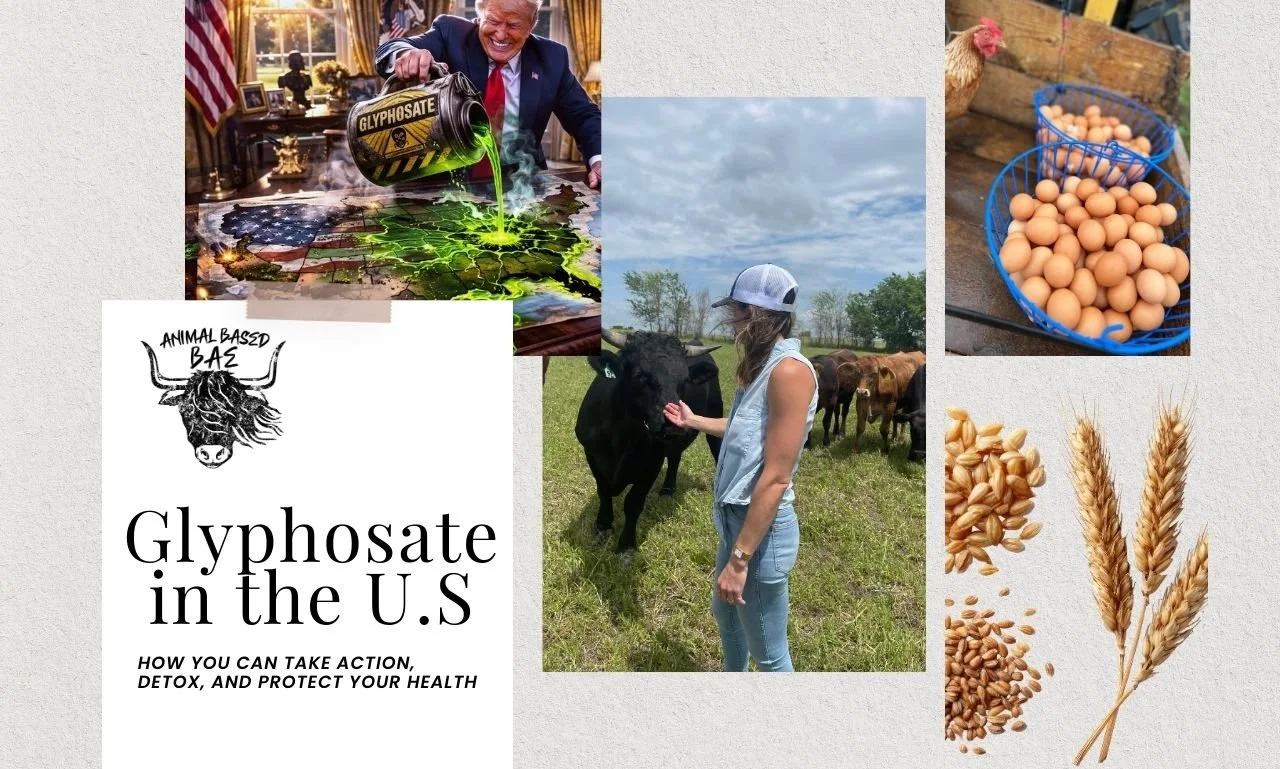
Glyphosate in the U.S.:
How You Can Take Action, Detox, and Protect Your Health
Many people are outraged that glyphosate remains legal in the United States, despite mounting lawsuits linking it to cancer and chronic illness. I understand the frustration.
But I’m a woman of action.
And sitting around waiting for regulatory agencies to change course isn’t a strategy.
Here’s the truth: consumer behavior changes markets.
Every dollar you spend either supports industrial, herbicide-dependent agriculture or it helps shift demand toward regenerative, low-input systems.
Stop outsourcing your health. Reclaim control.
The Legal & Regulatory Landscape
Glyphosate has not been banned in the U.S., despite:
Over 100,000 legal claims filed against Bayer
Billions of dollars awarded in non-Hodgkin’s lymphoma cases
Ongoing debate about long-term safety
Courts have recognized harm in certain cases. Federal agencies still allow widespread use.
That tension creates a frustrating reality.
So instead of waiting, you act.
Why Glyphosate Matters
Glyphosate (the active ingredient in Roundup) is widely used across U.S. agriculture and beyond.
It shows up in:
Grains: oats, wheat, corn, soy
Industrial oils: soybean, canola, corn, cottonseed
Produce: potatoes, spinach, strawberries, apples, etc.
Animal feed: conventional corn- and soy-fed poultry, pork and some cattle
Beverages: beer, conventional wine, grain-based spirits, coffee and cocoa
Non-food products: conventional cotton clothing, paper goods, certain personal care products
Pre-harvest desiccation in oats and wheat increases residue levels. Corn and soy dominate processed foods and industrial seed oils. Even animal products can carry indirect exposure through feed inputs.
It’s not just a “food issue.” It’s a system-wide one.
My Personal Strategy: Elimination First
Here’s something important:
I don’t eat most of the highest-risk foods anyway.
When you remove industrial grains, seed oils, and ultra-processed foods, you automatically eliminate many of the biggest glyphosate exposure points.
Elimination is powerful.
You don’t have to micromanage labels if you simply stop buying most of the contaminated categories in the first place.
But if you have a more diverse diet or are feeding a family here’s how to navigate it wisely.
The Animal-Based Advantage
One of the simplest ways to reduce glyphosate exposure is shifting toward an animal-based framework: meat, eggs, raw dairy, and organic fruit
But feed matters.
Ruminants (like cows) have multi-chambered stomachs that partially buffer feed inputs through microbial fermentation.
Monogastric animals (pigs and chickens) reflect what they eat much more directly in their fat and eggs.
So the sourcing rules I follow:
100% grass-fed and finished beef
Corn- and soy-free, pasture-raised eggs
Corn- and soy-free poultry and pork
Regenerative ranch meats
This is why I created my Animal-Based Guide to simplify sourcing and remove guesswork.
Support Local First (Even If They Aren’t “Certified Organic”)
This is important.
Some of the best farmers I know don’t carry the organic label.
Why?
Because certification is expensive. Paperwork is burdensome. Small farms often follow organic or better practices but choose not to pay for the label.
So instead of chasing marketing claims, do this:
Go to your local farmers market
Ask farmers directly about their practices
Ask what they spray (if anything)
Ask about feed sources
Ask about soil health and rotational practices
Transparency > certification.
Local relationships > corporate labels.
Supporting small, regenerative, transparent farmers keeps your dollars in your community and out of industrial monocrop systems.
If You’re at the Grocery Store: Here’s How to Decode It
If local isn’t available, use this hierarchy:
Regenerative (best)
Small-batch / local brand
USDA Organic
Non-GMO Project Verified
Organic is a meaningful step because synthetic herbicides like glyphosate are prohibited.
But not all organic is equal.
Large-scale organic brands can still operate like industrial systems — monocropping, centralized processing, long supply chains.
So here’s how to be strategic — especially in the categories where glyphosate commonly shows up:
Grains (oats, wheat, flour, pasta, bread): Look for USDA Organic, but go a step further when possible. Choose small-batch, stone-milled, or locally milled flours. Heritage grains or einkorn from transparent farms are even better. If buying oats, organic is especially important due to pre-harvest desiccation practices in conventional farming.
Corn & Soy Products: Look for USDA Organic or Non-GMO Project Verified. Avoid ingredient lists that include corn syrup, soy protein isolate, soybean oil, or generic “vegetable oil.” When possible, choose grain-free alternatives or products made with olive, coconut, or avocado oil instead.
Industrial Seed Oils: Flip the label over. If you see soybean oil, canola oil, corn oil, or cottonseed oil — put it back. Even organic versions of these oils are highly processed. Choose small-batch olive oil (look for harvest date and single-origin if possible), avocado oil, coconut oil, tallow, or grass-fed butter/ghee instead.
Animal Products: “Organic” does not always mean grass-fed. Look specifically for 100% grass-fed and finished on beef. For eggs and poultry, look for pasture-raised — not just “cage-free.” If possible, choose corn- and soy-free feed. Even better: buy from a local farm and ask what they feed their animals.
Wine: Conventional vineyards often use herbicides under vines. Look for USDA Organic Wine (not just “made with organic grapes”), or better yet, biodynamic certification. Small vineyard producers are often more transparent about practices. Dry-farmed and regenerative vineyard labels are strong indicators of lower chemical input systems.
Beer & Grain-Based Spirits: Choose organic beer when possible, especially if made from organic barley or wheat. Small craft breweries that source organic grains are preferable. For spirits, look for brands that advertise organic corn or wheat inputs.
Coffee & Cocoa: Look for organic and ideally specialty-grade or direct-trade sourcing. Smaller roasters tend to prioritize cleaner growing practices and traceability.
Scale matters.
High-Impact Consumer Shifts
If you only do a few things, start here:
Remove industrial seed oils
Switch to pasture-raised eggs
Choose grass-fed or regenerative meats
Replace conventional grains with organic or small-milled alternatives
Choose natural fiber clothing over conventional cotton
These shifts dramatically reduce both exposure and financial support of herbicide-intensive systems.
Non-Food Exposure Most People Miss
Glyphosate isn’t only about what’s on your plate.
It can also show up in everyday items you wear and use.
Consider:
Conventional cotton clothing (cotton is one of the most heavily sprayed crops)
Industrial paper goods like paper towels, toilet paper, and tissues
Skincare and personal care products containing soy, corn, or canola derivatives
Feminine care products such as conventional pads and tampons made with non-organic cotton
These exposures may seem small individually, but they add to your cumulative toxic load over time.
Better options:
Organic cotton, linen, hemp, bamboo or wool clothing
Bamboo or recycled paper products
Minimal-ingredient or tallow-based skincare
Organic cotton feminine care products
Your closet and your bathroom matter just as much as your kitchen.
Reducing exposure isn’t about perfection, it’s about lowering the total burden wherever you reasonably can.
Detoxing Glyphosate (Realistically)
Your body is designed to detox.
If you’re eating a whole-food, nutrient-dense diet (not ultra-processed junk) you’re already supporting natural elimination.
You can further support it with:
Filtered water for kidney function
Moderate fiber to support gut binding
Collagen and bone broth for gut lining support
Sweating through exercise or sauna
Fermented foods for microbiome resilience
Detox isn’t about aggressive cleanses.
It’s about restoring capacity and reducing incoming load.
You Have More Power Than You Think
You don’t need to obsess over every aisle.
You don’t need to live in fear.
You need clarity and intentionality.
Every purchase is a vote.
Every meal is a signal to the market.
I’ve made this easier for you:
My Glyphosate-Free Shopping List shares my favorite online brands
My Animal-Based Guide simplifies sourcing clean animal foods
End note
You do not have to wait for policy changes to protect your health.
Stop outsourcing your power.
Support local farmers.
Choose regenerative systems.
Eliminate what doesn’t serve you.
Small changes.
Massive ripple effects.
Your body and the market respond to what you fund.