Questions Worth Asking
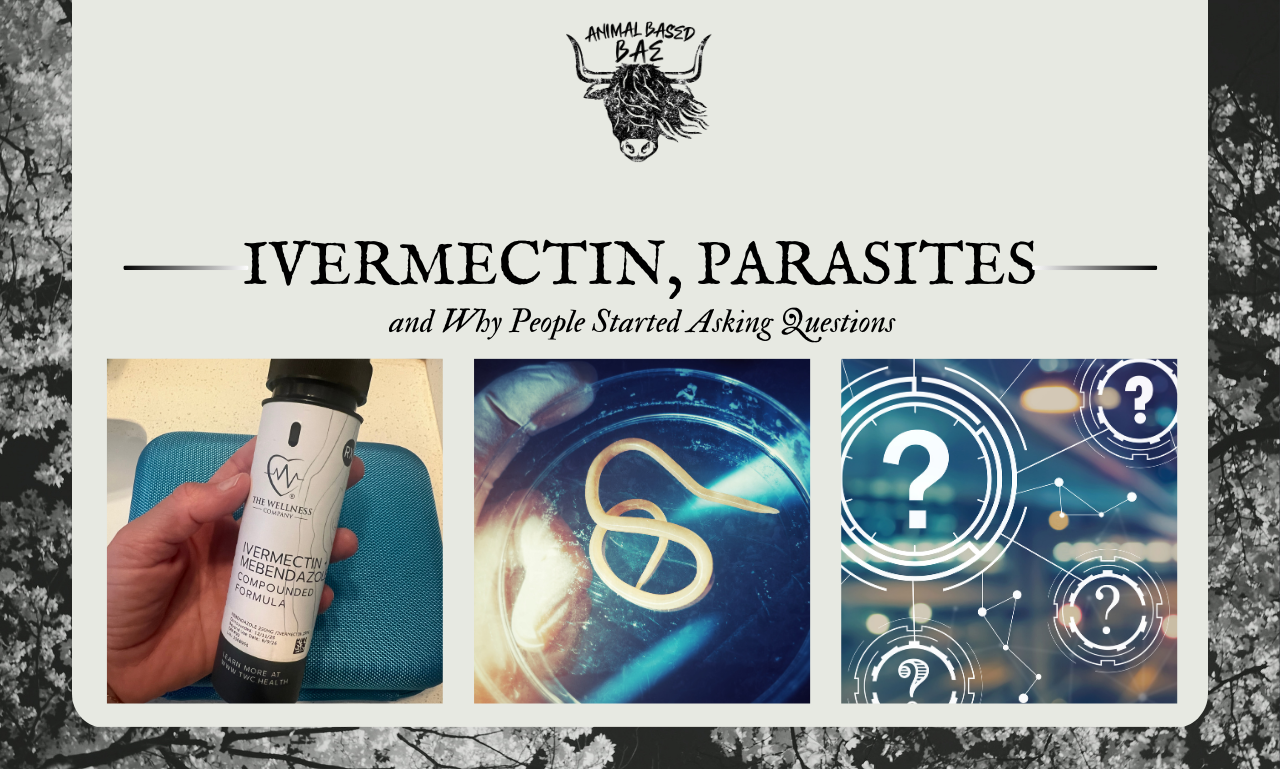
Ivermectin, Parasites, and Why People Started Asking Questions
Important disclaimer: This article reflects personal research, experience, and publicly discussed hypotheses. It is not medical advice, does not replace care from a licensed clinician, and avoids dosing or treatment instructions. I’m sharing information so readers can think critically and have informed conversations with qualified professionals.
Why This Came Onto My Radar
Like many people, ivermectin first came onto my radar during COVID — not because of headlines, but because physicians and researchers I already followed were discussing it seriously.
One of the most visible voices was Dr. Peter McCullough, a cardiologist and epidemiologist, who discussed ivermectin as a repurposed medication with a long safety history and multiple proposed mechanisms of action. That conversation pushed me to look deeper — beyond sound bites — into what ivermectin actually is, where it’s been used historically, and why it kept coming up.
That curiosity eventually expanded beyond COVID and into its original and primary use: antiparasitic medicine.
Why People Explore Ivermectin
Before talking about parasites, it helps to understand why people are drawn to ivermectin in the first place.
Ivermectin has been prescribed globally for decades and is listed by the World Health Organization as an essential medicine for certain parasitic infections — not as an appeal to authority, but simply to give context around how widely used and well-established it already was. That long history is part of why it entered the COVID conversation — not as something new, but as a repurposed medication.
During COVID, a number of physicians began reporting that patients who received ivermectin as part of early outpatient care appeared to experience milder symptoms, shorter illness duration, and reduced progression to severe disease. It was often discussed in combination with other supportive measures rather than as a standalone intervention. For many clinicians, its known anti-inflammatory and immunomodulatory properties were central to why it was considered potentially helpful during viral illness.
These observations — along with ivermectin’s long safety record when prescribed appropriately — led to widespread discussion, debate, and further study. While perspectives on its role during COVID continue to vary, this period is what brought ivermectin into mainstream awareness for many people, myself included.
Alongside that, people who explore ivermectin protocols often report anecdotal benefits, such as:
Reduced brain fog and improved mental clarity
Decreased systemic inflammation
Improved energy levels
Digestive changes or reduced bloating
Improvements in certain skin conditions
These experiences are not universal and should not be interpreted as guaranteed outcomes. Still, the consistency of these reports is what continues to drive interest.
From a research perspective, ivermectin has been studied for its:
Antiparasitic activity
Anti-inflammatory effects
Immunomodulatory properties
This multi-pathway activity is what many clinicians find compelling and is part of why interest in ivermectin extended beyond parasitic disease alone.
One of the most prominent voices during this time was Dr. Peter McCullough, who discussed ivermectin extensively during COVID. He emphasized its decades-long global use, its known safety profile when prescribed appropriately, and its potential role within early outpatient treatment strategies.
Whether one agrees or disagrees with his conclusions, his work prompted many people to ask an important question: why was a long-used medication being dismissed outright instead of openly examined and debated? For me, that question — not blind acceptance — is what sparked deeper investigation.
Parasites: The Part Most People Skip
Now, the uncomfortable but important part.
Yes — humans can carry parasites, often unknowingly.
Exposure can come from:
Undercooked low quality meat or seafood (largely depends on the source)
Contaminated water
Soil and produce
Travel (even short-term)
Pets and livestock
Parasites may reside in:
The gastrointestinal tract
Liver
Lungs
Bloodstream
Muscle tissue
Many infections are asymptomatic or present as vague symptoms like fatigue, bloating, brain fog, or skin issues — which is why they’re often overlooked.
Why Ivermectin Is Known for Parasite Control
Ivermectin earned its reputation because it is highly effective against many parasites. It works by disrupting nerve and muscle function in certain parasites, leading to paralysis and death of the organism.
It’s important to be precise here:
It is extremely effective against specific parasites
Effectiveness depends on the organism, formulation, and clinical context
No medication is truly “100% effective” in every scenario
That said, ivermectin’s track record in parasitic disease control is why it has been used globally for decades and why its discovery led to a Nobel Prize in Medicine.
My Personal Path: From Curiosity to Human-Grade Formulations
My early exploration began with equine ivermectin paste, largely because of its accessibility and low cost at the time. Over time, however, I became increasingly uncomfortable with the variability and uncertainty involved.
Animal formulations are designed for animals weighing well over 1,000 pounds, which introduces obvious challenges when translating use to humans. Beyond dosing concerns, I learned that ingredient distribution in paste formulations can be inconsistent, particularly as products age or approach expiration. Inactive ingredients can separate from active compounds, which adds another layer of risk. Storage conditions and shelf life also matter more than most people realize.
Because of these factors, I eventually decided that continuing down that path wasn’t aligned with my comfort level around safety or consistency.
That led me to transition to human-grade compounded formulations prepared by licensed compounding pharmacies. In some cases, these formulations include ivermectin alongside other antiparasitic agents and are used under professional oversight. I chose an ivermectin + mebendazole formulation because the two medications work through different mechanisms and are often discussed together in clinical contexts for broader antiparasitic coverage than ivermectin alone.
In simple terms:
Ivermectin works by disrupting the nervous systems of certain parasites, leading to paralysis and death.
Mebendazole works by interfering with a parasite’s ability to absorb glucose, effectively starving it.
Using a pharmacy-compounded, human-grade formulation removed much of the guesswork for me and felt more aligned with consistency, quality control, and personal safety. While everyone’s comfort level and decision-making process will differ, this transition marked an important shift in how I approached the topic overall.
Why Some People Use It as a Periodic “Reset”
For some individuals, ivermectin isn’t viewed as a one-time intervention, but as part of a periodic health reset — often framed around parasite awareness rather than acute illness.
The reasoning goes something like this:
Humans are exposed to parasites more often than we tend to acknowledge — through food, water, travel, animals, soil, and even other humans. Many parasites don’t cause dramatic symptoms right away. Instead, they may quietly contribute to things like chronic inflammation, digestive issues, fatigue, skin problems, or brain fog.
Because of this, some people choose to explore antiparasitic strategies on a consistent, spaced-out basis, similar to how others approach seasonal cleanses or gut resets. For me personally, this has looked like exploring it roughly every six months — not as a rigid rule, but as part of a broader awareness of environmental exposure and internal balance.
People who take this approach often describe it less as a “detox” in the trendy sense, and more as periodic maintenance — especially if they:
Travel frequently
Spend time outdoors or in rural environments
Work closely with animals
Are mindful of long-term inflammatory load
This isn’t about chasing symptoms or assuming something is “wrong.” It’s about acknowledging that modern humans still live in biological bodies interacting with a very real ecosystem.
Why Some People Keep It in an Emergency Kit
Some individuals also choose to keep ivermectin as part of a personal preparedness or emergency kit, particularly those who:
Travel internationally or to remote regions
Live rurally or off-grid
Work closely with animals or livestock
Prioritize broad-spectrum readiness and self-education
For many, this choice isn’t rooted in fear — it’s rooted in autonomy, education, and preparedness. Just as some people keep antibiotics, water filters, or first-aid supplies on hand, others prefer access to medications they’ve already researched and understand.
I personally source mine through The Wellness Company, which provides clinician involvement and pharmaceutical-grade standards. For me, that matters — not just for quality control, but for peace of mind around sourcing, formulation, and consistency.
If you choose to explore their products, my code BAE will give you a discount.
Are There Cons?
Nothing is without limitations.
Potential considerations include:
Not all parasites respond to ivermectin
Drug interactions matter
Quality and formulation are critical
The biggest “con” I see isn’t the compound itself — it’s poor information and lack of nuance.
Final Thoughts
I’m not here to convince anyone.
I’m here to encourage curiosity without hysteria, research without dogma, and informed decision-making. Ivermectin didn’t start as a headline — it started as a tool. Understanding why people explore it requires stepping outside fear-based narratives and actually reading the history.
Take what resonates. Leave the rest. Ask better questions.
Lindsay