The Sunscreen Lie
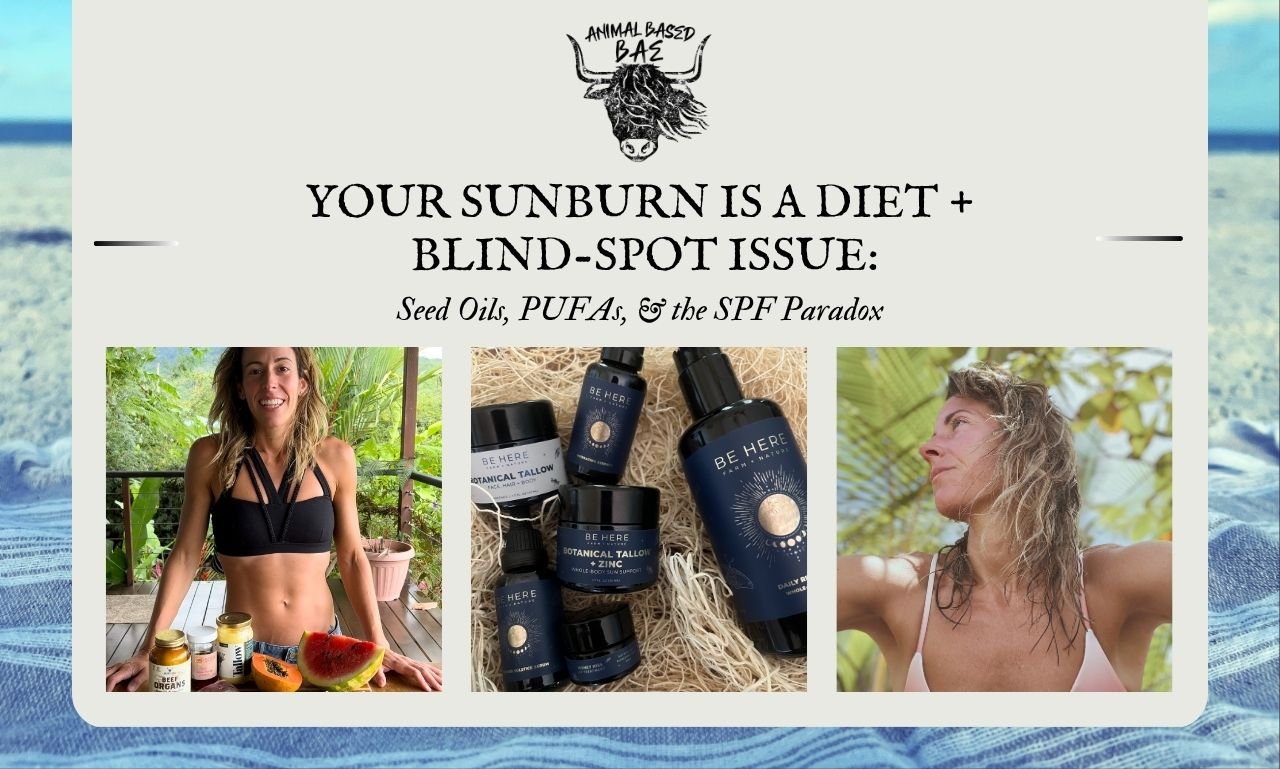
Your Sunburn is a Diet and Blind-Spot Issue: Seed Oils, PUFAs, and the SPF Paradox
We’ve all been lied to.
Let’s stop pretending the sun suddenly decided to become toxic to humans in the last fifty years. The sun didn’t change. Our diet changed, our skincare changed, and we biologically blocked the very alarm bell meant to protect us.
If you are currently slathering yourself in SPF 50 chemical sludge just to walk to your car, while simultaneously eating food cooked in commercial seed oils, you are literally gaslighting your own biology. You aren't burning because the sun is your enemy. You are burning because you are frying from the inside out in real time, staying out far longer than nature intended and the very products sold to protect you are making it worse.
The Great Sunscreen Paradox
For decades, we’ve been told that chemical sunscreen is our only defense against skin cancer. Yet, despite sunscreen sales skyrocketing to multi-billion dollar heights, skin cancer rates have steadily climbed.
In fact, epidemiological studies show a staggering paradox: frequent sunscreen users often have a higher risk of developing skin cancers, including melanoma, compared to those who don't use it.
How is this possible?
The Biological Blindfold: toxic sunscreens excel at blocking UVB rays—the burning rays that serve as your body's natural alarm system telling you to get into the shade. By blocking UVB, you turn off your sensory alarm while allowing deep, destructive UVA rays to penetrate your tissues unchecked for hours.
Systemic Chemical Absorption: you are quite literally slathering synthetic compounds onto your body's largest organ. Common chemical filters like oxybenzone, avobenzone, and octocrylene absorb directly into your bloodstream after a single application, circulating at levels that trigger endocrine disruption and cellular damage.
The Vitamin D Block: by blocking UVB rays entirely, you completely halt your body’s ability to manufacture Vitamin D. You are systematically blocking the very hormone your body relies on for cellular defense.
The False Sense of Security: Beyond the biochemistry lies a massive behavioral trap. Sunscreen has become a license for recklessness. Armed with a bottle of SPF, people spend entire days baking in the direct sun, drinking cocktails, and completely overriding their natural limits. They assume a chemical film makes them invincible, but in reality, they are just extending their exposure to radical cellular damage far longer than nature ever intended. The true paradox of sunscreen is that it doesn't save people from the sun—it just convinces them to stay in it until they burn from the inside out.
Vitamin D: Your Ultimate Cancer Defense
Vitamin D is not actually a vitamin. It is a powerful steroid hormone that coordinates your entire immune system, thyroid function, and cellular health.
When you block UVB rays, you shut down the cholesterol-to-hormone cascade. Your body needs a steady supply of clean saturated fats and healthy cholesterol to synthesize Vitamin D when sunlight hits.
By systematically depleting your Vitamin D levels through chemical blocks, you strip away your body’s premier defense mechanism. Vitamin D is a massive regulator of cell growth; it is highly protective against almost every major form of cancer, including skin cancer itself. The very molecule you need to protect your cells from abnormal growth is the one you are actively blocking.
The Rancid Truth: You Are Frying From the Inside Out
To understand why you burn, you have to look at what you eat first.
Think about what happens when you leave a bottle of canola or soybean oil out on a hot deck in July. It oxidizes, breaks down, and goes completely rancid.
When you consume the Standard American Diet, those exact same unstable industrial seed oils like canola, corn, soybean, cottonseed, safflower, and sunflower oil are what your body uses to build your skin cell membranes. These are Polyunsaturated Fatty Acids (PUFAs), which are structurally fragile because they contain multiple weak double bonds.
When you step out into the sun, UV light hits those PUFA-laden cells and triggers rapid lipid peroxidation (the degradation of fats). The sun is literally cooking the unstable, rancid plant fats sitting inside your tissues, causing a massive cascade of free radicals and cellular oxidative stress. This internal instability is what causes you to turn into a bright red lobster after twenty minutes of exposure.
Conversely, when you switch to a clean, animal-based diet loaded with stable saturated fats (beef tallow, butter, suet, and raw dairy), your cell membranes become structurally sound. Saturated fats have no weak double bonds; they do not easily oxidize under heat or light. By changing your dietary fats, you build a physical, cellular armor from the inside out.
The Internal SPF Diet: Foods That Build Sun Resilience
To build a "solar callus", a natural, gradual upregulation of melanin and skin resilience you need to feed your skin the raw materials it needs to handle UV light.
Here is your grocery list for internal SPF. You don't need to consume all of these in one day; instead, weave them into your diet consistently throughout the summer months:
Astaxanthin-Rich Seafood: Wild-caught salmon, shrimp, lobster, and krill. Astaxanthin is a powerhouse carotenoid that acts as an internal antioxidant, absorbing UV energy and mopping up free radicals before they can cause DNA damage. (I source my clean seafood from Seatopia—use code BAE20 for a discount).
Saturated Fats & Squalene: Grass-fed beef tallow, pasture-raised butter, ghee, and raw dairy. These provide structurally stable lipids to replace fragile, easily oxidized PUFAs in your cell membranes. (I get my low-PUFA raw dairy from Triple E Farms—use code BAE25).
Retinol & Copper: Grass-fed beef liver, pasture-raised egg yolks, and high-quality beef. Vitamin A (retinol) and copper are essential cofactors for melanin production—the pigment that naturally darkens your skin to protect it from deep UV penetration. (I love sourcing my meat from Santa Carota during the summer because their unique carrot-finished beef contains significantly higher amounts of beta-carotene and Vitamin A—use code BAE10).
Collagen & Glycine: Slow-cooked bone broth, chuck roast, and oxtail. This supplies the exact amino acids needed to rebuild and repair the skin's structural collagen matrix. (If you want an easy alternative, grab the clean collagen or protein powders from Lineage—use code BAE15).
Lycopene-Rich Foods: Watermelon and pink grapefruit. Lycopene is a highly bioavailable antioxidant that significantly reduces UV-induced skin redness and erythema.
Polyphenol Catalysts: Organic blueberries, blackberries, and high-quality dark chocolate. Cacao is packed with flavanols that improve skin blood flow, density, and hydration under the sun.
The Sun Protocol: Rewriting Your Relationship with Light
You do not need to bake under the midday sun all day. In fact, most of your sun exposure should be highly intentional and incremental.
Morning Light: Get 10–15 minutes of early morning sun on your bare skin and eyes (no sunglasses, no contacts) to set your circadian rhythm and trigger melatonin production—the body’s premier nighttime cellular repair antioxidant.
Incremental Exposure: Start with 10 to 20 minutes of midday sun to stimulate Vitamin D production, and then consciously move to the shade before your skin turns pink.
Physical Barriers First: When you have reached your biological solar limit for the day, skip the SPF sprays. Reach for physical barriers: lightweight linen clothing, wide-brimmed straw hats, and beach umbrellas.
When You Need All-Day Protection: Clean Topicals
For those days when you are out on the beach all day, working at high altitudes, or cannot access shade, you need a safe topical barrier.
Avoid the toxic chemical aisle entirely. Look for non-nano zinc oxide mineral formulas—ideally sitting in an ancestral, skin-compatible base of grass-fed tallow or organic butter/oils rather than synthetic texturizers.
A clean, minimalist zinc oxide formula provides excellent, broad-spectrum physical protection without disrupting your endocrine system or leaching toxins into your bloodstream. For outstanding, truly clean, and ancestral formulations that honor your skin's biology, look into options like Be Here Farm + Nature and Mother Fo Care suncreams. They contain protective zinc without compromising your cellular health.
Stop fearing the light. Fix your food, feed your cell membranes the clean fats they crave, ditch the chemical sludge, and reclaim your birthright to stand in the sun.
My Bottom Line
I’m not interested in turning the sun into something to fear.
I love the summer too much. I love the warmth too much. I love that it gets us outside, boosts our mood, and makes a simple day outdoors feel like medicine.
But I also think there’s room to sun-bathe smarter.
If I’m ranking sun strategies from a low-tox, biology-first perspective, building a gradual, natural "solar callus" through morning light and incremental exposure comes out on top for me because it primes your skin to handle stronger UV rays naturally. After that, I’d put physical barriers like lightweight linen and wide-brimmed hats, then a clean, tallow-based zinc oxide mineral suncream for those long, unavoidable days on the water.
That doesn’t mean you need to lock yourself indoors or live in the dark. It just means a few intentional choices like clearing fragile seed oils out of your diet, swapping toxic sunscreen for physical shade or clean mineral barriers, and listening to your skin's natural pink alarm bell can go a long way.
Keep the sun. Keep the lifestyle. Keep the warmth.
Just sun-bathe a little smarter.