Low-Tox Grill Guide
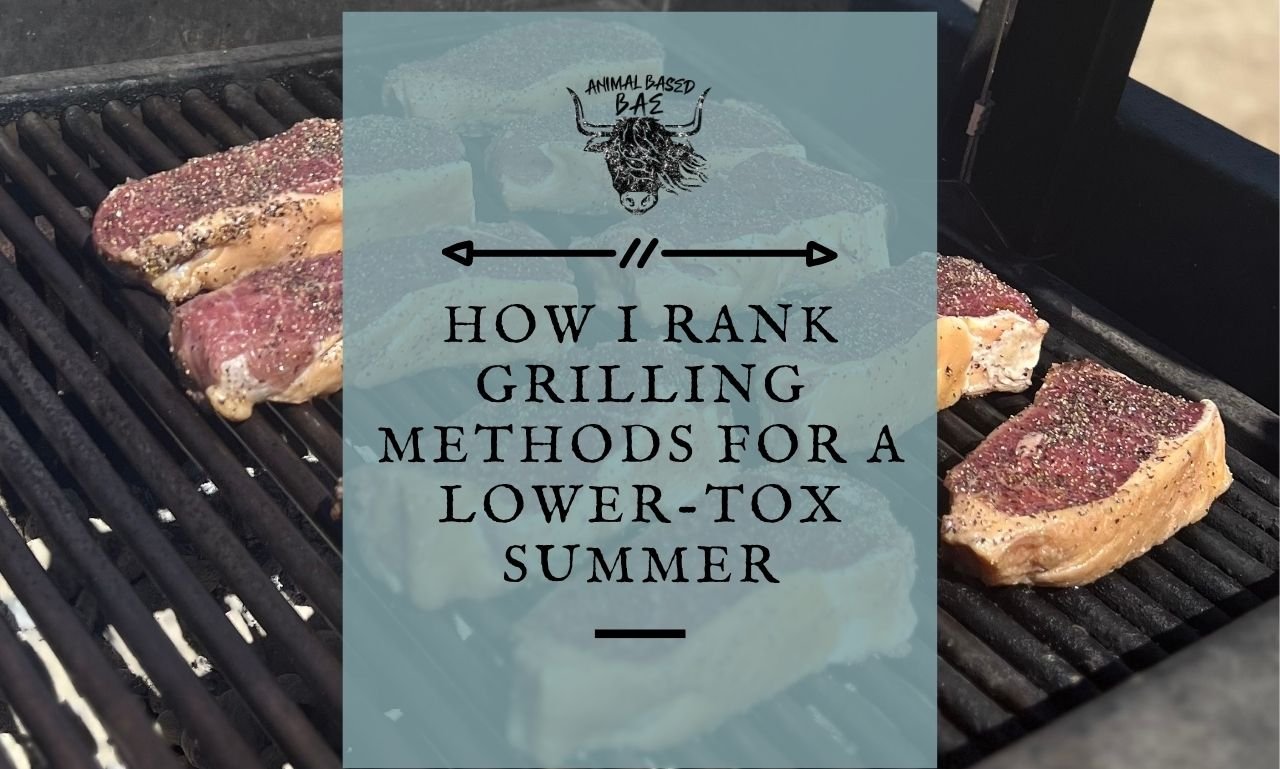
I Love Grilling
Here’s How I Rank Outdoor Cooking Methods for a Lower-Tox Summer
There’s a reason grilling never gets old for me.
The smell, the ritual of cooking outside, the fact that dinner suddenly becomes an experience instead of another task in the kitchen. The open air, the slower pace, the little bit of smoke in the air, and that flavor you just can’t recreate the same way indoors.
I love grilling because it feels primal in the best way—fire, meat, salt, summer, people gathered outside. But I also care about reducing unnecessary toxins where I can, and grilling is one of those areas where a few smarter choices can make a real difference without sucking the joy out of it.
Because yes, grilled food is delicious. But not all outdoor cooking methods are equal when it comes to smoke exposure, flare-ups, excessive charring, and the compounds that can form when meat is cooked at very high temperatures.
So instead of pretending grilling is “bad,” I’d rather talk about how I personally rank grilling methods if the goal is to keep the flavor, keep the ritual, and make it a little more low-tox.
And if you want the deeper science on HCAs, protective marinades, and how to reduce carcinogens while cooking meat, I already wrote a full post on that—this article is more about the grills, the tools, and the setup.
Why I Love Grilling in the First Place
Before I get into the ranking, here’s why I still love grilling so much and why I actually grill year-round.
1. It gets the heat, smoke, and mess out of the house
One of the biggest wins of grilling is simply moving the cooking environment outdoors. Instead of filling your kitchen with smoke, grease, lingering smells, and high heat, you keep all of that outside.
That matters to me. Indoor air quality is something I think about, and high-heat cooking indoors can create a lot of smoke and particulates. Grilling outside doesn’t mean there’s zero exposure, but it does mean your house doesn’t have to absorb all of it.
2. The flavor is unmatched
You can absolutely make great meat in a cast iron pan or oven, but grilled food has its own thing going on. The crust, the sear, the smokiness, the caramelization—all of it.
3. Grilling naturally keeps meals simple
When I grill, I’m usually not making some complicated recipe with twenty ingredients. I’m thinking burgers, steaks, lamb chops, chicken breast, salmon, maybe some fruit on the side, and a simple marinade or just salt.
It pulls me back to what I actually want more of anyway: quality meat, simple ingredients, and cooking methods that let the food speak for itself.
4. It’s deeply satisfying
Protein cooked over heat is one of the most satisfying meals there is. A grilled steak or burger with some fruit, raw dairy, or a simple side feels nourishing, filling, and uncomplicated.
What Actually Makes One Grilling Method “Lower-Tox” Than Another?
When I think about ranking grills or outdoor cooking setups, I’m not ranking them based on trendiness or brand hype. I’m thinking about a few practical things:
How much fat drips directly into flame or coals
How much smoke is created and blown back onto the food
How easy it is to avoid excessive charring
How much control you have over heat and cooking time
Whether the setup encourages a quick sear vs. prolonged blackening
Because when people talk about grilling and carcinogens, they’re usually referring to compounds that form when meat is heavily charred or when fat and juices hit an open flame and create smoke that coats the food.
That doesn’t mean you should never grill. It means the setup matters.
So here’s how I personally rank outdoor cooking methods if the goal is to enjoy grilling while minimizing some of the obvious downsides.
My Lower-Tox Ranking of Outdoor Cooking Methods
1) Best: Overhead Infrared Grill
If I’m choosing the setup that best aligns with how I want to grill, this is it.
My current favorite is the Schwank Portable Infrared Grill, and the reason has less to do with hype and more to do with the actual design.
The heat comes from above—not below
This is the biggest reason I like it. On a traditional grill, the heat source sits under the meat. As fat and juices drip down, they hit the flame or burner, burn, and create flare-ups and smoke.
With an overhead infrared grill, the burner sits above the meat, while drippings fall away into a tray below instead of directly onto a flame. That means:
fewer flare-ups
less smoke from burning fat
less smoke redepositing onto the meat
more control over the final result
Beyond the cooking style, these grills are incredibly practical for daily use, offering quick heat-up times and fast cooks. While they are small and portable—perfect for tight spaces or camping trips—the grate can still hold up to twelve quarter-pound burgers at once. Plus, they come in both propane and natural gas options and feature a bottom tray designed to catch juices, which is perfect if you want to flavor a side dish cooking below.
It gives you a very fast sear
I like quick, intentional high-heat cooking much more than letting meat sit forever over aggressive heat. Infrared grills are built to sear quickly and efficiently, which makes it easier to get the crust you want without turning the exterior into a burnt shell.
It feels cleaner and more controlled
For me, the biggest advantage of this style of grill is control. You can still get the steakhouse-style sear and grilled flavor, but with less chaos underneath the meat.
Best for:
steaks
burgers
lamb chops
quick-cooking proteins where you want an epic sear
Tradeoffs:
more of an investment
not the giant “cook for twenty people” backyard setup
more specialized than a standard grill
Still, if someone asked me what outdoor cooking setup I’d personally choose most often from a lower-tox perspective, overhead infrared is my answer.
2) Better: Pellet Grill or Smoker with Indirect Heat
Great for lower, slower cooking—but still a smoke environment
This one is a little more nuanced.
If your goal is to avoid constant flare-ups and direct charring, a pellet grill or smoker can actually be a solid middle-ground. You’re often cooking with indirect heat at a lower temperature than a screaming hot open-flame grill, which can make it easier to avoid burning the outside of the meat.
Why I rank it fairly high:
less direct fat-on-flame action than a traditional grill
easier to cook larger cuts gently and evenly
often less aggressive charring
great for brisket, ribs, roasts, chicken, and bigger cuts
Why it’s not my #1:
You’re still intentionally cooking in a smoke environment. And while that’s part of what gives smoked food its flavor, it also means smoke exposure is part of the method.
So for me, pellet grills and smokers can absolutely have a place—especially for occasional slow cooks or larger cuts, but they’re not my everyday top choice if the goal is minimizing smoke and keeping things as simple as possible. Plus, they can be time consuming.
Best for:
brisket
ribs
roasts
whole chickens
pork shoulder
larger cuts that benefit from lower, slower cooking
3) Good: Gas Grill with Direct + Indirect Heat Zones
Probably the most practical option for most people
A standard gas grill can still be a great tool if you use it intentionally. In fact, this is probably the category most people already own, and I don’t think you need to toss it out just because it’s not “perfect.”
Why I still like gas grills:
they keep the heat and smoke outside
they’re easy to turn on and use consistently
you can create cooler zones and indirect cooking areas
they’re practical for everyday use
The downside:
Most gas grills still have the classic bottom-burner setup, which means fat can drip downward, hit the heat source, and create flare-ups. So while I’d rank a gas grill above charcoal or open-flame cooking for everyday practicality, it still requires a little intention.
How I’d make a gas grill “better”:
use a cooler zone instead of blasting everything directly over high heat
avoid overloading it with very fatty cuts that cause constant flare-ups
keep the grill clean so old grease isn’t burning
don’t char meat into oblivion just because you like grill marks
Best for:
everyday burgers
leaner steaks
chicken drumsticks, wings, thighs
shrimp
easy weeknight grilling
4) Lower on My List: Charcoal Grills & Live-Fire Charcoal Cooking
Incredible flavor, but more smoke and less control
This is where I know some people will disagree with me because charcoal flavor is amazing. And to be clear: I get it. Charcoal-cooked food can be incredible.
But if I’m ranking methods specifically through a lower-tox lens, I can’t put charcoal near the top.
Why I rank it lower:
more smoke exposure
more direct contact with high heat
more dripping fat hitting hot coals
more flare-ups
easier to over-char food if you’re not careful
Now, there’s nuance here. A kamado-style grill or charcoal setup that uses indirect heat is going to be a better option than just throwing burgers over ripping-hot coals and letting them burn. But in general, charcoal tends to create more smoke, more unpredictability, and more opportunities for the exterior of the meat to get overdone.
My take:
Do I still think charcoal tastes amazing? Absolutely.
Do I think it’s the method I’d choose if my main goal is minimizing smoke, flare-ups, and burnt edges? No.
Best for:
occasional flavor-first grilling
people who love the ritual of charcoal and know how to manage it well
5) Most Occasional / Least Controlled: Open Flame or Campfire Cooking
Fun, primal, and not my lower-tox pick
Cooking meat over an open flame or campfire is one of the most enjoyable things ever. It’s primal, nostalgic, and honestly one of the best parts of being outdoors.
But from a lower-tox perspective, it’s the method I’d place at the bottom of the list.
Why:
direct flame exposure
lots of smoke
inconsistent heat
easy to blacken the exterior before the inside cooks properly
fat dripping directly into fire
So while I’m absolutely not against live-fire cooking, I view it more as a special occasion experience rather than an everyday, health-conscious setup.
Think about it in terms of consistency. I grill outside practically every single day, so for me, a grill like the Schwank is well worth the investment. Don't get me wrong—I’ve been to plenty of live-fire events, absolutely love them, and will continue to go to them. But when you are cooking consistently, you have to be mindful of lowering your overall toxic load.
It comes down to a simple question: How often are you actually using your grill? Accumulation is the real factor here. Breathing in heavy smoke at a weekend camping trip or a rare event is one thing; doing it a few times a week is another.
My Lower-Tox Grilling Tips No Matter What You Use
Even the “best” grill can turn into a mess if you use it badly, so here are the things I focus on no matter what setup I’m using.
1. Avoid excessive charring
A sear is great. Burnt, blackened meat is not the goal. I want color and crust, not a hockey puck.
2. Use simple marinades
Marinades are one of the easiest ways to support flavor and reduce some of the downsides of high-heat cooking. I go much deeper on this in my How to Reduce Carcinogens While Cooking post, but some of my favorite ingredients are:
rosemary
oregano
thyme
citrus juice
olive oil
salt
A simple rosemary + olive oil and citrus marinade goes a long way.
3. Skip sugary bottled sauces at the beginning
Sugary sauces burn quickly, and once they start blackening, you’re moving away from “grilled” and into “burnt.” If I want a glaze or sauce, I’d rather add it near the end or after cooking.
4. Minimize flare-ups
Flare-ups are one of the easiest ways to create excess smoke and burnt residue. Trim excess fat if needed, keep your grill clean, and move meat away from flames if they start licking the food.
5. Don’t overcook your meat
This sounds obvious, but it matters. The longer meat sits over high heat, the more opportunity there is for it to dry out, char, and lose the texture you actually wanted in the first place.
What I Actually Love to Grill
My usual lineup:
burgers
skewers (made from cubed roast)
salmon
chicken breast
steaks
lamb chops
fruit like pineapple or peaches
Most of the time, I’m not trying to do anything fancy. I want a good cut of meat, clean ingredients, simple seasoning, and a cooking setup that gives me flavor without as much smoke and chaos.
My Daily Low-Tox Setup & Resources
If you want to replicate my exact home setup, here are the tools I use daily to keep my cooking clean, both outdoors and indoors:
My Outdoor Setup: I use the Schwank Infrared Grill for my daily outdoor cooking because of its overhead burner design. If you want to check it out, you can use code ANIMALBASEDBAE at checkout.
My Indoor Setup: Since I grill outside a lot, I keep smoke out of the house and my indoor air quality stays in great shape. However, on the days I do cook indoors and for overall clean air quality, I run a powerful Jaspr Air Purifier in the living spaces to catch cooking particulates instantly. If you want to check it out, you can use code ANIMALBB at checkout.
The Deep Dive: For the full scientific breakdown on how to prep your meat to minimize carcinogens, read my companion article: Reduce Carcinogens While Cooking
My Bottom Line
I’m not interested in turning grilling into something to fear.
I love the flavor too much. I love the ritual too much. I love that it gets me outside, keeps the heat and smoke out of the house, and makes a simple meal feel like an event.
But I also think there’s room to grill smarter.
If I’m ranking outdoor cooking methods from a lower-tox perspective, overhead infrared comes out on top for me because it minimizes one of the biggest issues with traditional grilling: fat dripping into a flame and smoking back onto the food. After that, I’d put indirect pellet grilling, then a well-used gas grill, with charcoal and open-flame cooking as more occasional options.
That doesn’t mean you need to throw out the grill you already own. It just means a few intentional choices—your grill setup, your heat control, your marinades, and how much charring you allow—can go a long way.
Keep the fire. Keep the flavor. Keep the ritual.
Just grill a little smarter.
If you want the deeper science on HCAs, marinades, and how I reduce carcinogens while cooking meat, read my companion post: How to Reduce Carcinogens While Cooking.