Stop Chasing Inflammation
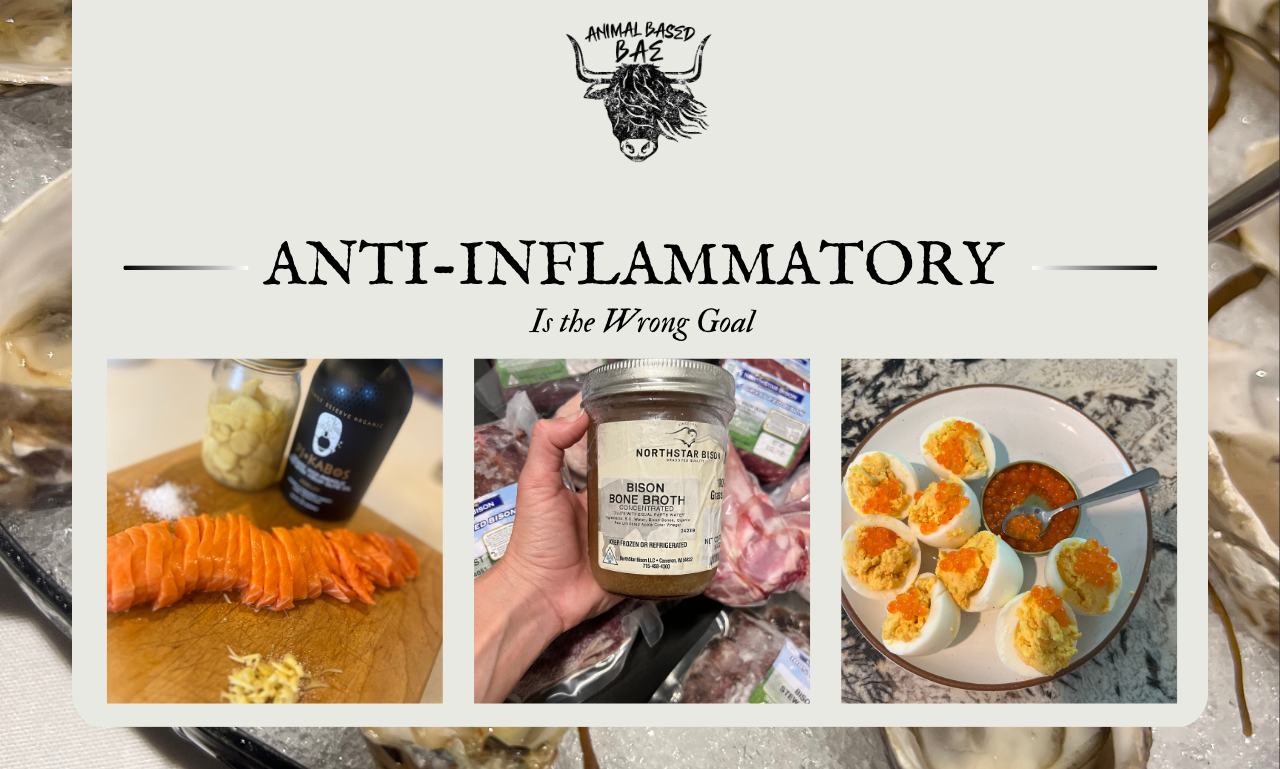
Inflammation Isn’t the Enemy — It’s the Signal
After a severe low back injury, I didn’t reach for foods labeled “anti-inflammatory” to shut inflammation down.
I reached for foods that support healing.
That distinction matters.
Inflammation is a biological signal. It increases blood flow, recruits immune cells, and initiates tissue repair. The issue isn’t inflammation itself—it’s unresolved inflammation combined with nutrient depletion.
Instead of suppressing the body’s response, I focused on feeding it what it needs to resolve inflammation properly and rebuild resilient tissue.
That meant prioritizing:
Slow-cooked, collagen-rich meats
Omega-3 rich seafood (micro-plastic free!)
Mineral-dense broths
High-quality fats and simple seasoning
Why Easy-to-Digest Foods Matter During Recovery
When your body is repairing tissue after an injury, digestion itself can become a metabolic stressor. Foods that are nutrient-dense but hard to digest force the body to divert energy toward breaking them down instead of using nutrients for repair. Easy-to-digest foods—like slow-cooked collagen-rich meats, fish, and mineral broths—deliver amino acids, minerals, and fats in a form your body can quickly absorb and use for tissue regeneration, nervous system support, and immune function.
Science supports this: protein from slow-cooked meats and fish is more bioavailable, collagen peptides are easier to assimilate, and cooking methods that soften connective tissue increase digestibility while preserving key micronutrients.
The result? Less digestive strain, more energy for healing, and improved overall recovery.
Why Omega-3s Matter During Injury Recovery
Omega-3 fatty acids (EPA and DHA) don’t “turn inflammation off.”
They help the body complete the healing cycle.
The science: EPA and DHA are precursors to specialized pro-resolving mediators (SPMs) like resolvins and protectins, which:
Clear inflammatory debris
Reduce excessive immune signaling
Support tissue regeneration without blunting repair
Omega-3s don’t suppress healing — they help the body finish it.
Best Omega-3 Seafood for Recovery
1. Caviar (Fish Roe)
One of the most overlooked healing foods.
Why it matters:
Exceptionally high DHA for nervous system and spinal repair
Rich in choline for cell membrane integrity
Vitamins A, D, E, and B12
Supports nerve signaling, disc health, and tissue regeneration
From a biological standpoint, roe is designed to build life — it’s nutrient-dense by nature.
2. Sardines
Small, powerful, and easy to digest.
Benefits:
High EPA + DHA
Selenium for oxidative protection
Supports mitochondrial energy during recovery
3. Wild Salmon
A reliable recovery staple.
Benefits:
Strong omega-3 profile
High-quality protein for muscle and connective tissue
Astaxanthin for recovery support
I source my seafood from SeaTopia, one of the the cleanest sources on the planet—mercury-safe and microplastic-free—so it supports healing instead of adding the contaminants that are all too common, even in wild-caught fish. If you want to source the healthiest fish too, use code BAE20.
Eat to repair, not to create more metabolic stress.
Why Slow-Cooked, Collagen-Rich Meats Are Foundational
If healing connective tissue, discs, fascia, and ligaments is the goal, slow-cooked meats are non-negotiable.
These cuts provide the raw materials required for structural repair.
Top Healing Cuts
Oxtail
Beef shank
Short ribs
Neck
Chuck
Why These Cuts Work
They are rich in:
Collagen → glycine & proline (ligaments, fascia, discs)
Gelatin (joint cushioning and hydration)
Iron, zinc, copper (tissue regeneration and oxygen delivery)
Stable fats for nervous system regulation
Slow cooking breaks down connective tissue into highly bioavailable amino acids and makes food easier to digest during physical stress — a critical factor during injury recovery.
I choose pasture-raised, grass-fed meats because their balanced omega profile supports healing, tissue repair, and metabolic resilience—unlike grain-fed meats, which are often higher in omega-6s and can promote inflammatory stress. Eat meat that nourishes, not burdens, your recovery. Shop my most trusted farms—all regenerative and micronutrient-dense—for the highest quality protein.
Mineral Broths: Structural Nutrition for the Spine
Broth isn’t trendy — it’s foundational.
Key nutrients:
Glycine & proline → collagen synthesis
Glutamine → immune and gut regulation
Calcium, magnesium, phosphorus → bone, disc, and nerve support
This matters deeply in low back injuries where connective tissue, discs, and nerve pathways intersect.
Best Broths for Recovery
Beef bone broth: disc, ligament, and tendon repair
Chicken bone broth: acute injury phases and nervous system calming
Fish head or frame broth: nerve repair and trace minerals
I usually make my own broth and source bones from the farms above, but when I’m dealing with an injury and my freezer isn’t stocked, I order from Northstar Bison and snag their Bison Broth (code: BAE10). They’re the only company I know using reverse osmosis water, and their broths are incredibly concentrated and gelatinous.
I’m also trying a newer option with clean ingredients and high-quality water. I just placed my first order—while I haven’t visited their farms like I have with Northstar, I was able to connect with their team, learn more about their sourcing, and felt confident enough to try it myself. Owl Venice feels like a safe, clean option. I usually keep seasonings minimal and add my own, but in this case it’s actually nice to have it done for you—the added bonus of healing-promoting spices in their broth elixirs makes it even better.
Fats & Spices That Support Healing (Without Suppression)
Extra virgin olive oil:
Supports cell membrane health
Enhances nutrient absorption
Helps modulate inflammation without blocking healing
I source the cleanest, purest extra virgin olive oil here, as many oils on the market are counterfeited or oxidized—which can hinder healing rather than support it. High-phenolic content EVOO is the way to go for true nutritional benefit.
Spices (used simply):
Ginger → pain modulation and circulation
Turmeric → resolution signaling
Black pepper → improves nutrient absorption
Foods That Can Slow Recovery
Not all foods support repair. Highly processed, refined, and inflammatory foods can increase oxidative stress, disrupt nutrient balance, and prolong inflammation, which slows tissue regeneration.
Common culprits include:
Refined sugars and sweets
Processed vegetable oils (soy, corn, canola)
Ultra-processed packaged foods and snacks
Excess alcohol
These foods do not directly stop healing but create metabolic noise that makes it harder for your body to prioritize tissue repair and nervous system recovery.
Why I Don’t Call This “Anti-Inflammatory”
Labeling foods as “anti-inflammatory” often leads people to:
Fear inflammation
Suppress symptoms
Miss the opportunity for true repair
The goal isn’t to silence the body.
The goal is to support resolution, regeneration, and resilience.
These foods work because they:
Provide structural building blocks
Support nervous system stability
Improve cellular communication
Reduce inflammatory excess without blocking healing
Final Thought
Injury is expensive — metabolically, neurologically, emotionally.
Healing requires nutrient density, not restriction.
When you feed the body slow-cooked collagen-rich meats, omega-3 seafood, and mineral-dense broths, you’re not fighting inflammation —
you’re giving the body what it needs to rebuild properly.