The October Reset
The October Reset: A Simple Guide to Eating Well This Fall
Forget the detox. This October, I am going back to basics.
Every fall, there seems to be a new opportunity to overhaul everything.
A new diet.
A new supplement routine.
A new workout plan.
A new detox.
A new set of health goals.
But I am not interested in starting something new every time the calendar changes.
I am interested in getting back to the basics.
October feels like a natural time to take inventory of what actually matters, simplify my routine and let the season influence the way I eat, move and spend my time.
This is not a 30-day detox or another restrictive challenge.
It is an October reset built around simple, sustainable habits that support a healthy lifestyle year-round.
1. Prioritize whole foods
The foundation is simple: eat real food.
For me, that means building meals around nutrient-dense foods like meat, eggs, dairy that I tolerate well, seasonal produce and organ meats.
Not because these foods are trendy, but because they provide nutrients in the form that food naturally comes in.
Instead of constantly looking for the next food, powder or supplement to add, I want to make sure I am consistently eating the foods that have always made me feel good.
Simple ingredients. Fewer distractions. More actual food.
If you are looking to simplify your own approach to animal-based eating, I put together my Animal Based Guide to help you get back to the basics without overcomplicating what goes on your plate.
2. Make nutrient density a priority
One of my biggest priorities this fall is getting back into the habit of eating organ meats consistently, especially liver.
Organ meats are some of the most nutrient-dense foods you can eat. Liver, heart and kidney are particularly rich sources of nutrients including B vitamins, iron, zinc, copper, choline and vitamin A.
And I have noticed that when organ meats fall out of my routine, I miss them.
This is another reason I think nutrition can become unnecessarily complicated. Sometimes the answer is not another supplement. Sometimes it is simply putting more nutrient-dense food back on your plate.
And making sure you are getting organ meats into your diet may sound like one more thing to add to your routine, but it really does not have to be complicated.
There are now a lot of ancestral-style ground meat blends that combine muscle meat with organs, so you can cook them exactly like you would regular ground beef. No separate liver preparation. No figuring out how to make kidney taste good. No fussing with organs.
One of my favorites is Vitality Blend, which I actually created with White Oak Pastures. It combines ground beef with organ meats and cooks just like ground beef, making it an incredibly simple way to work more organs into your regular meals.
Organ meats deserve a place in a nutrient-dense diet, and they do not have to be intimidating. If organs are new to you, check out my Guide to Eating Organ Meats for simple, baby-step ways to start incorporating them into your meals.
3. Keep meals simple, grounding and repeatable
One of the ways I keep eating well simple is by having a few meals I can make over and over without getting bored.
For me, that is often just a ground beef bowl.
Ground beef is one of those foods that can be incredibly versatile, nutrient-dense and, especially with meat prices being what they are, relatively economical compared with constantly buying different cuts of meat.
The base stays the same, but I can change the meal depending on what I have or what sounds good.
Sometimes I mix in an organ meat blend. Sometimes I add different herbs or seasonings. Sometimes it is mustard. Sometimes I add cottage cheese for extra protein and creaminess. I might change the toppings or have it alongside some seasonal fruit.
Same basic meal. Different enough that it does not feel like I am eating the exact same thing every day.
And honestly, I think that is a much more realistic approach to meal prep than feeling like you need seven completely different recipes every week.
I want meals that are grounding, satisfying and repeatable.
The goal is not to create endless variety for the sake of variety. It is to find a few simple meals that make it easy to consistently eat nourishing food.
And this is where I love fall cooking.
There is something about October that makes a big pot of soup, stew or chili feel like the most practical meal in the world. It is warm, grounding and easy to make in a large batch.
Make enough for dinner and you have lunch for the next few days.
That is the kind of meal prep I actually like: make one good meal and let it work for you for a few days.
Meal prep does not have to mean spending your entire Sunday portioning out identical containers.
Sometimes it simply means cooking more of what you already eat.
A big pot of soup. A batch of ground beef. Several burgers. Eggs that are easy to grab. Seasonal fruit that is ready to eat. A few simple ingredients that can become meals without much thought.
Same foundation. Small changes. Less decision-making.
That is the kind of simplicity I want more of this fall.
4. Eat with the season
October does not need to look exactly like July.
The weather changes. Daylight changes. What is growing around you changes. Your appetite and activity can change, too.
That does not mean abandoning the way you eat.
It means adapting to what the season is already giving you.
One of the things I love about seasonal eating is that it can actually make eating well simpler. Instead of constantly asking, What should I be eating right now? you can look around you.
Mother Nature has already done a lot of the planning.
There is a reason the old Farmer’s Almanac-style approach to food was so tied to the seasons. Before everything was available year-round, people naturally ate what was growing, being harvested, hunted, preserved or produced around them.
That takes a lot of decision fatigue out of food.
In the fall, that might mean apples, pears, late-season berries, root vegetables, squash, honey, fresh meat and warming meals like soups and stews. In the summer, it might look completely different.
It is not about creating another set of food rules. It is simply paying attention to what is naturally available where you live.
And while modern grocery stores allow us to eat almost anything, anytime, there is something valuable about letting your local season guide more of your meals. Foods grown and harvested in their natural season may be fresher and more readily available locally, and seasonal eating gives you an opportunity to support the farmers and food producers who are actually growing food around you.
This is also a good time to reconnect with farmers, ranchers, farmers markets and small food producers in your area.
The more connected you are to your local food system, the less you have to rely on a food industry telling you what you should be eating.
Look around. Eat what is growing. Let the season do some of the decision-making for you.
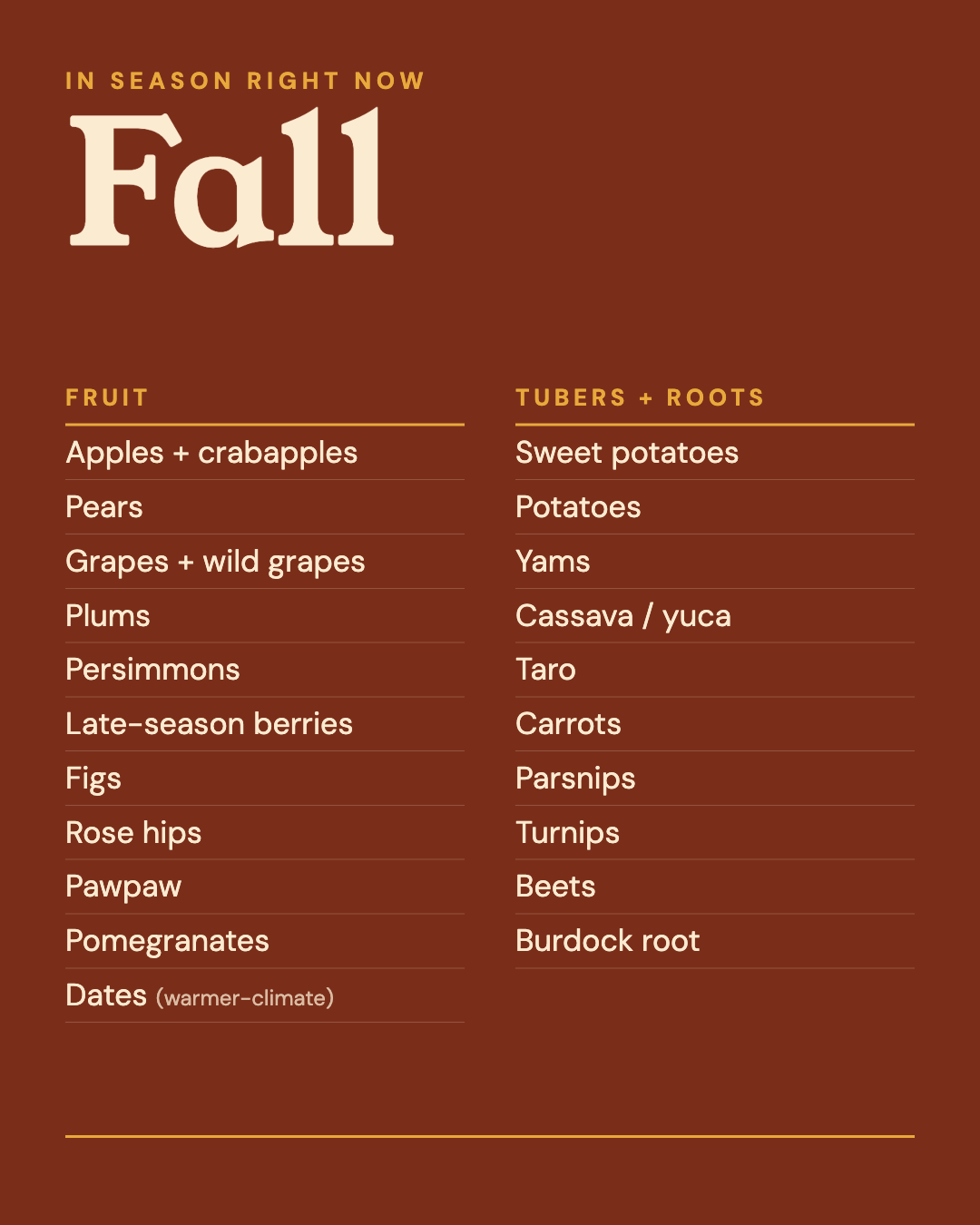
If you want more ideas for building simple meals around whole, animal-based foods and seasonal fruit, my Animal Based Guide is a good place to start.
5. Keep getting outside
The days are getting shorter, but that does not mean my time outside stops.
I still want sunlight, fresh air and movement to be part of my daily routine.
Sunlight plays an important role in vitamin D production and provides environmental cues involved in regulating our circadian rhythm.
The season changes.
The basics do not.
So get outside when you can. Walk. Hike. Sit in the sun when appropriate. Notice the changing weather and daylight.
Health does not have to happen inside a gym or a supplement cabinet.
6. Move to feel strong
Fall does not need to mean punishing yourself for what you ate during the summer.
Move because you want a body that is strong and capable.
Walk.
Lift.
Hike.
Carry something heavy.
Play.
Do whatever kind of movement helps you feel stronger and more connected to your body.
The goal is not simply to burn calories.
It is to build a body that can participate in your life.
7. Make healthy eating easier
One of the most overlooked parts of nutrition is your environment.
What is actually in your kitchen?
What foods do you reach for when you are hungry?
What do you have available when you are busy?
If you want to eat more whole foods, make whole foods convenient.
Keep quality meat in the freezer.
Keep seasonal fruit and produce available.
Stock simple ingredients you know you will use.
Make larger batches of meals that keep well for several days.
Have convenient whole-food options for the days when you do not have time to cook.
Convenience is not inherently the problem.
What you make convenient matters.
A busy life does not require you to abandon the way you want to eat. It may simply require you to make your preferred foods easier to access.
And sometimes the easiest form of meal prep is simply cooking enough dinner to have leftovers tomorrow.
For the times when you really do need something convenient between meals or on the go, you can still prioritize quality and whole-food nutrition. Lineage Protein Bars are one of my go-to options because they keep things simple: real-food ingredients, quality protein and something I can grab without compromising the way I want to eat.
The goal isn't to make every meal perfect.
It is to make the way you want to eat easy enough to actually repeat.
8. Stop trying to optimize everything
Perhaps the biggest part of my October reset is letting go of the idea that I need to constantly improve my health routine.
I do not need another complicated protocol.
I do not need to chase every new wellness trend.
I do not need to turn every meal into a math equation.
I need a solid foundation.
Whole foods.
Nutrient density.
Quality protein.
Organ meats.
Seasonal eating.
Local sourcing when possible.
Sunlight.
Movement.
Sleep.
And enough simplicity that I can actually enjoy my life.
If you are looking for a place to start, my Animal Based Guide was created around this same idea: taking the complicated noise out of eating and giving you a simple foundation you can actually build on.
Final Takeaways
October is not about starting over.
It is about coming back to what works.
Less noise.
Less chasing.
Less obsession with the newest health trend.
More real food.
More nutrient density.
More simple meals.
More soup.
More local food.
More time outside.
More movement.
More connection to where my food comes from.
And maybe a little less time thinking about health altogether.
Because healthy living does not have to be complicated to be intentional.
This October, I am not adding more. I am getting back to basics.