Designed For Nature
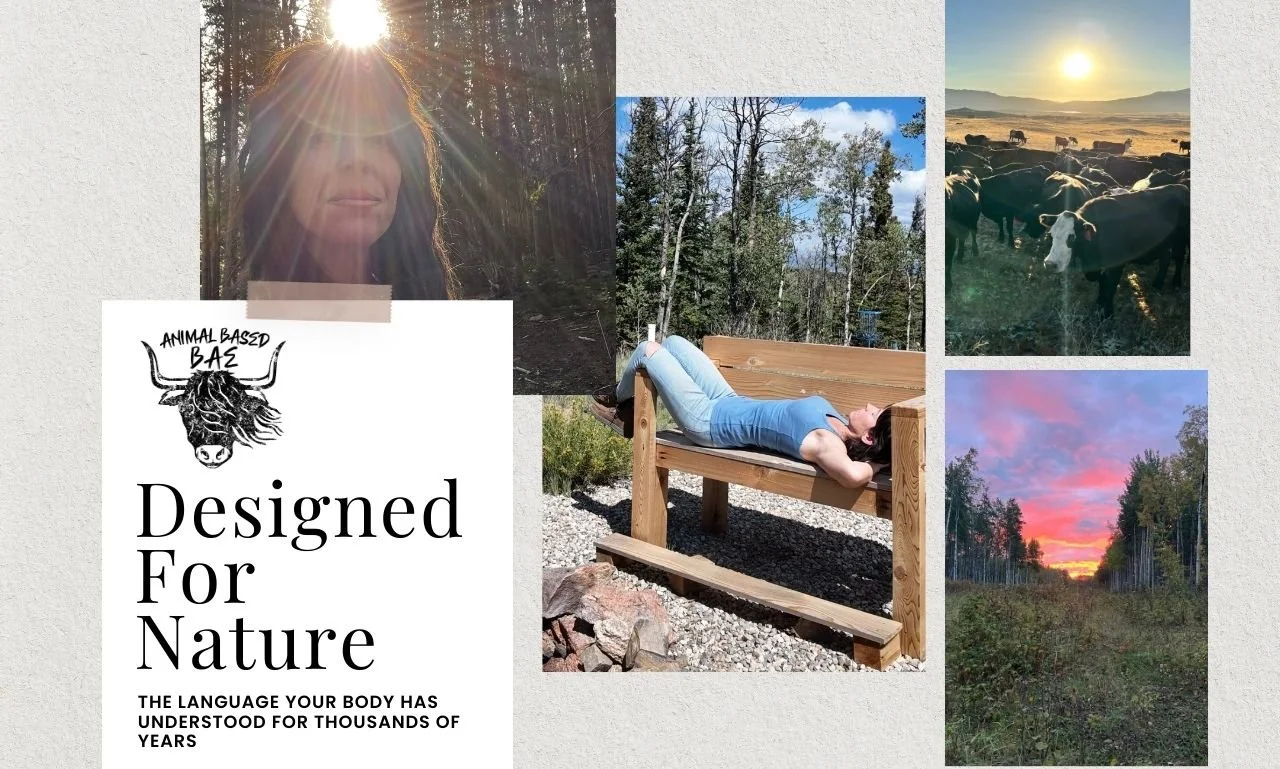
The Language Your Body Has Understood for Thousands of Years
We talk so much about food, supplements, and workouts…
but one of the biggest forces shaping how you feel every single day is something most people barely think about:
Light.
The Little Habits That Quietly Change Everything
The light you see when you wake up.
The light in your home.
The light your skin never gets because we were taught to fear the sun instead of embrace it.
And now winter hits and most of us go straight from:
bed → car → indoors
Our ancestors lived entirely synced with the sun.
Our biology still expects that.
But the modern world has pulled us far away from the signals our body understands.
And the wild part?
Your body is responding to every light signal you give it.
Why Light Matters More Than You Think
Dr. Andrew Huberman and countless circadian biology experts talk about this constantly: Your brain has light-sensing cells that tell every other cell in your body what time it is.
That one signal influences:
Energy
Hunger and metabolism
Sleep quality
Hormones and reproductive health
Mood and anxiety
Focus, cognition, learning
Rate of aging
Stress response and inflammation
In summer — we still spend most of our days behind screens and harsh LEDs.
In winter — almost no real light hits our eyes or skin.
Your biology becomes confused.
You feel:
tired but wired
hungry at the wrong times
more anxious
foggy and unmotivated
harder to sleep, harder to wake
more inflamed
Not because it's winter…
but because your internal clock has no idea what time it is.
This Isn’t About Perfection — It’s About Awareness
You don’t need a strict routine.
You just need to remember what your biology expects — and give it tiny signals throughout the day.
These subtle shifts create massive changes.
5 Small Habits That Change Everything
1.Step Outside in the Morning (1–2 minutes)
Direct sunlight tells your body: It’s morning — turn energy ON.
Even bundled up, go outdoors — glass blocks key wavelengths your brain needs to set your clock.
Brightness first thing =
better morning energy
fewer nighttime cravings
earlier, deeper sleep
2. Let Your Home Get Dim at Night
Swap bright overhead LEDs for warm, low light.
Melatonin isn’t just a sleep hormone —it’s a darkness signal.
When evening light stays bright, your brain thinks: Keep going — it’s not nighttime yet.
Dim light after sunset =
smoother wind-down
better digestion and repair
a calmer nervous system
3. Mid-Day Light Exposure
Even if it’s cloudy.
Even if it’s cold.
Even if it’s a walk to the mailbox.
Light doesn’t need to feel bright to work — your cells still read the signal.
Also try a few minutes in:
late morning or early afternoon
again as sun lowers
Daylight is mitochondrial fuel —like oxygen for your cells.
3. Be Intentional With Screens After Sunset
Screens tell your brain: Stay alert — daytime isn’t over.
But darkness tells your body: Recover. Repair. Make melatonin.
Use:
warm screen tones
blue-light filters
dimmer brightness
Not perfection — awareness. You’re choosing how tomorrow will feel.
4. Bring Real Darkness Back
Our ancestors lived by firelight — warm, flickering, soothing.
Your biology still expects that.
Try:
lamps instead of overhead LEDs
candles or salt lamps in the evening
blackout curtains in the bedroom
No darkness = no deep recovery, no optimal metabolism
When you give your body true night, it responds fast: better hormones, better immunity, better sleep. You get to choose how you want to feel tomorrow morning.
Why These “Little Things” Aren’t Little
Every one of these tiny habits supports:
clearer thinking
steadier energy
fewer cravings
deeper sleep
calmer mood
better hormones
stronger immunity
lower inflammation
more presence + resilience
No supplement can replace what light does.
Because light is the first language your body ever learned — long before electricity, alarms, wellness trends, or “routines.”
My Tools for Staying Consistent
Once you understand how powerful light is, the secret becomes making it automatic in daily life. Here’s how I do it — simple systems that support ancient biology in a modern world:
Morning light and vibration plate
I pair my sunrise light exposure with my vibration plate — a double win:
light sets a healthy cortisol rhythm
movement supports lymphatic flow and energy
It keeps me consistent because it’s actually an enjoyable way to wake my body up instead of just gazing.
Red light–only nights
I swapped all my evening lighting to warm red bulbs, lamps, and even motion-sensor lights for nighttime navigation.
Zero harsh blue light = deep sleep and true melatonin release
Once you do this, you’ll feel the difference instantly.
I also travel with red-light blocking glasses so hotel rooms or strange environments don’t sabotage me.
(If swapping bulbs feels like a big jump, these glasses are a great beginner hack.)
Smart screens, not bright screens
On laptops, I use IRIS — a program that reduces blue-light flicker and shifts screens to warmer tones and red light automatically.
On iPhone/iPad, I use the built-in settings (night shift and red tint).
During daytime, I wear yellow-tinted lenses that block excessive blue flicker while keeping me alert.
Early dinner and sunset walk
I eat on the earlier side — then immediately go for a short walk outside.
Just a few minutes of fading daylight tells my body: Day is ending… digestion and calm mode ON.
Total darkness for sleep
No light pollution.
No glowing chargers.
Blackout curtains if needed.
Your sleep environment should mimic firelight, then full darkness.
These habits aren’t stressful. They're grounding.
They reconnect me with signals my body understands instantly.
What Winter Reminds Us
Winter pulls us indoors.
Disconnects us from the sun.
Disrupts the rhythm we evolved with for thousands of years.
But it also gives us an opportunity to be more intentional.
To bring back the signals our biology depends on:
Warmth
Rhythm
Nature’s timing
A home that soothes instead of overstimulates
We don’t have to fight the modern world.
We just need to navigate it with awareness.
Our ancestors lived with the sun — and our hormones still think we do.
Even the smallest corrections…
and your body responds fast.
Because it remembers.