Skip The Meat
The Lost Art of Sacrifice:
Why Reclaiming Our Freedoms Starts at the Labor Day Grill
We like to talk about freedom in America, but we rarely talk about what buys it.
Freedom isn't sustained by passive consumption, convenient routine, or long weekend distractions. It is bought, protected, and expanded through sacrifice.
The 19th-century trade unionists and working families who forged Labor Day understood this truth in their bones. In 1894, railroad workers at the Pullman Palace Car Company in Chicago walked off the job after the company slashed wages by roughly 25% while refusing to lower rents in the company-owned town where most of them lived. Eugene Debs's American Railway Union joined the fight, and within weeks 125,000 workers across nearly 30 railroads had struck in solidarity. Federal troops were sent in. Dozens of workers were killed. In the middle of that crisis, President Grover Cleveland and Congress created a national Labor Day holiday — in part as a peace offering to a labor movement they could no longer ignore.
Those workplace rights weren't handed down by generous corporations or benevolent politicians. Someone paid a price for them. Working families sacrificed their immediate comfort so that future generations could live with dignity.
Yet somewhere along the way, we lost the appetite for sacrifice. We lulled ourselves into trading our leverage for convenience. Nowhere is that forgotten history more obvious than around the grill on Labor Day weekend.
The Comfort Trap: How We Traded Power for Convenience
Today, we "honor" the sacrifices of the working class by driving to a massive corporate chain store, filling carts with factory-farmed meat, and handing our hard-earned money right over to the very kind of concentrated corporate power the labor movement spent generations fighting.
It is the ultimate irony of modern American life.
Four massive corporate conglomerates—Tyson Foods, JBS, Cargill, and National Beef—control roughly 85% of the U.S. beef processing market. They own dozens of brand names designed to give you the illusion of choice, while pulling off one of the biggest wealth transfers in modern agricultural history.
And this isn't the first time meatpacking specifically has been at the center of this exact fight. In the early 1900s, Chicago's stockyards were the site of major labor strikes over brutal wages and unsafe conditions — the same conditions Upton Sinclair exposed in The Jungle. At almost the same moment, the federal government prosecuted the industry's "Big Six" packers: Swift, Armour, Morris, Cudahy, Wilson, and Schwartzchild for illegally fixing prices and carving up the market, a case the Supreme Court upheld in 1905. Meatpacking, in other words, has a documented history of doing both things at once: squeezing the people who worked in it, and squeezing the country through monopoly power. Today's Big Four aren't the same companies, but they're running the same playbook, in the same industry, more than a century later.
Here's how it works now:
They Squeeze the Rancher: Independent American cattle farmers are getting crushed. Meatpackers pay ranchers bottom-dollar while forcing family-owned ranches into bankruptcy.
They Squeeze the Consumer: While paying farmers pennies on the dollar, the Big Four jack up prices at the grocery store checkout counter. Their profit margins—the "spread"—reach historic highs during peak grilling holidays like Labor Day.
They Count on Our Apathy: They bet on the fact that you will be too tired, too distracted, or too attached to convenience to care where your food comes from.
While families innocently fire up the charcoal, these giant corporations are laughing all the way to the bank. We are being lulled into a comfortable, distracted routine and calling it "celebrating."
Progress Demands a Price
If we want to protect independent American farmers, rebuild local economies, and reclaim control over what goes into our bodies, we have to face an uncomfortable truth: we will not progress forward without sacrifice.
Real freedom requires us to stop choosing what is easy and start choosing what is right. It requires us to say: "I am willing to spend a little more time, travel a little further, or spend a few more dollars to ensure my money goes to an independent human being instead of a predatory cartel."
If the railroad workers who walked off the job in 1894, and the stockyard workers who struck a decade later, could risk their livelihoods and safety to stand up to concentrated corporate power, we can certainly sacrifice two minutes of convenience at the grocery store.
The Labor Day Challenge: Draw the Line
This Labor Day, stop participating in the illusion. Turn this holiday back into a day of real action, solidarity, and intentional sacrifice.
THE RULE FOR THIS WEEKEND:
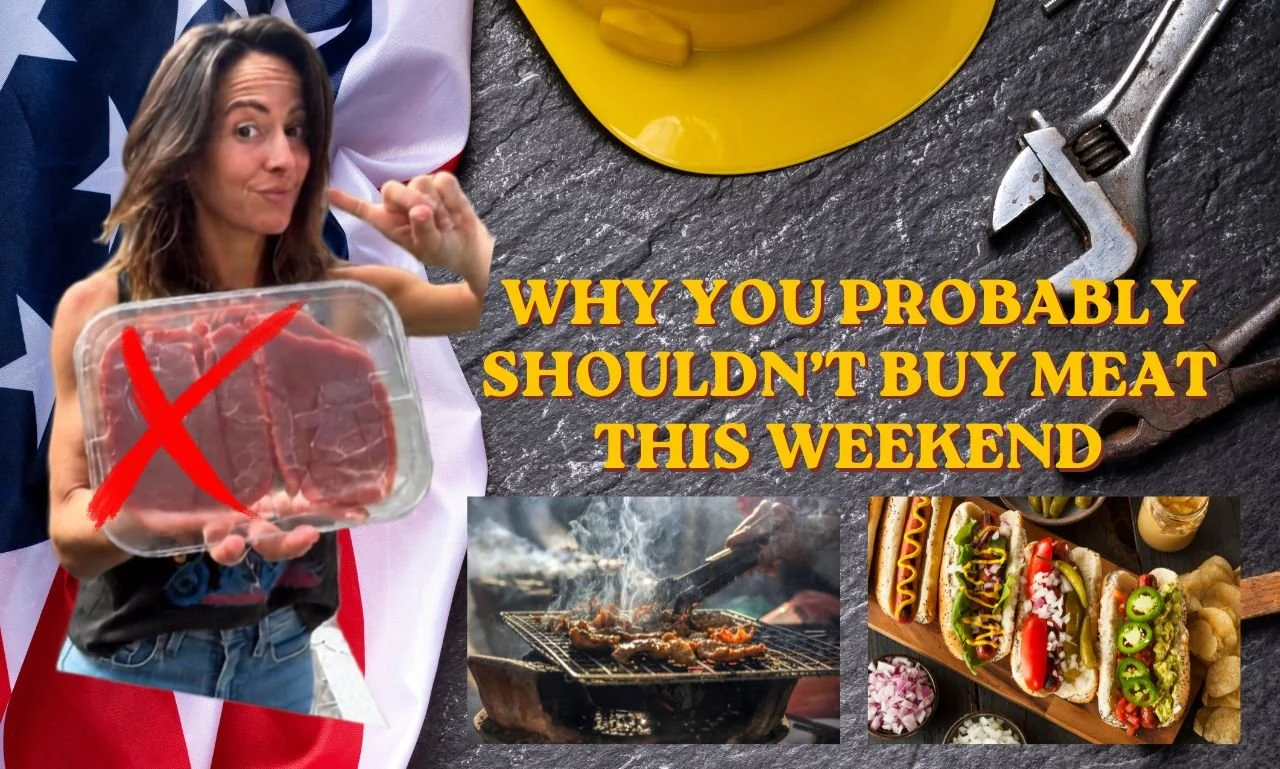
Do not buy a single ounce of meat from a major grocery chain, big-box store, or corporate distributor.
You might ask: How do I even know if meat came from a Big Four processing plant?
The uncomfortable truth is, behind the fancy labels and pastoral packaging at mega-grocers, you usually don't. They intentionally obscure the supply chain. So instead of guessing games at a supermarket counter, eliminate the middleman altogether.
What to Do Instead:
Visit a Farmers Market or Farm Stand: Take a drive to a local farmers market or road-side farm stand. While many independent ranchers offer home delivery during the year, a holiday weekend is the perfect time to visit in person, shake the producer's hand, and buy directly from the people who raised the animal and cared for the land.
Find a Neighborhood Butcher or Regional Farm Co-Op: Seek out independent butcher shops that transparently source from local pastures. Put your dollar directly into the hands of a local business rather than a corporate conglomerate.
Shop Local Independent Grocers & Enforce the "State Line Rule": Skip the mega-chains and look for small, locally owned grocers that stock regional goods. If your food wasn't grown, harvested, or raised within your state or immediate region, leave it on the shelf.
Or... Don't Buy Meat at All This Weekend: If you are concerend with the cost, make an intentional sacrifice and skip it entirely. Fill your board and grill with vibrant local produce—heirloom tomatoes, fresh stone fruit, regional cheeses, and sourdough bread. Show the food cartels that your appetite isn't captive to their supply chain.
Final Thought: Reclaim Your Power
Rights are never permanently won; they are maintained by every generation that refuses to bow to monopoly control.
This weekend, remember the people who walked off the job so you could have a weekend in the first place. Honor their legacy not with passive consumption, but with active conviction.
Reclaim your table. Reclaim your local economy. Reclaim Labor Day.